News Archive
Past news form knowledge and technology transfer at Helmholtz.
Helmholtz successfully hosts Start-up Days and 4Investors
October 18, 2025
This year saw two outstanding events that are having a decisive impact on start-up activity in the non-university research sector in Germany. Together with the Fraunhofer Society, the Leibniz Association, and the Max Planck Society, Start-up Days and 4Investors took place in October 2025. We are very proud to have hosted these events. Both focused on the transfer of research into entrepreneurial activity and demonstrated how vibrant and innovative our network is.
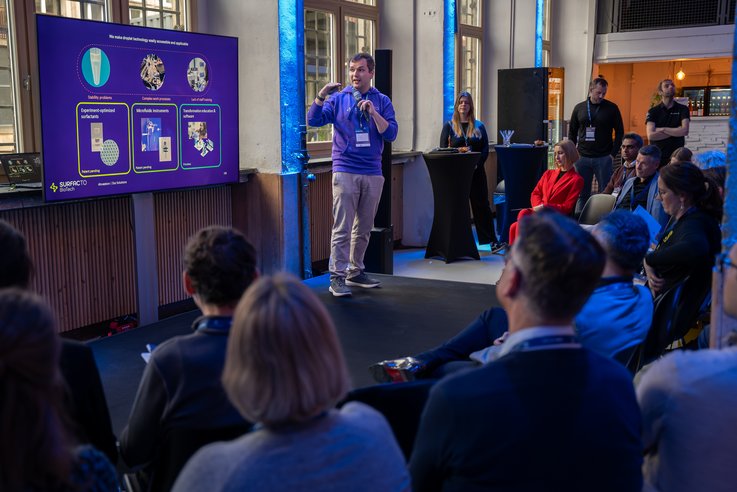
The Start-up Days took place on October 15, 2025, in Berlin and offered researchers interested in starting their own businesses a platform for exchange, learning, and networking. Around 100 participants from the worlds of science and start-up support came together to learn more in workshops on business model development, financing, and pitch training.
In addition to practical insights from experienced founders, the focus was on collegial exchange.
One day later, on October 16, more than 160 participants gathered in Berlin for 4Investors Day. On stage, 40 technology-oriented start-ups presented innovative business ideas from the fields of deep tech & AI, life sciences & med-tech, green energy, and space to investors. In a dynamic atmosphere of pitches, one-on-one meetings, and exhibition stands, numerous new contacts and cooperation opportunities arose. The high level of interest from the financing side was particularly encouraging, underscoring the high innovative value of the projects presented.
© Alexi Papadopoulos
Chronic hepatitis B: First patient receives new vaccine
July 05, 2025
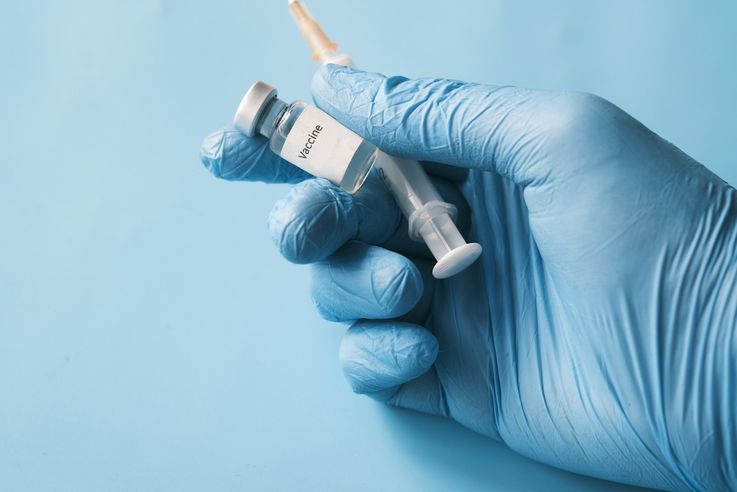
Helmholtz Munich, a research center of the Helmholtz Association, has taken a decisive step in the fight against chronic hepatitis B: In June 2025, the first patient received the newly developed therapeutic vaccine TherVacB as part of a clinical trial. After more than 13 years of research, the approach is now being tested on patients for the first time.
TherVacB is designed to activate the immune system so that the body can fight the virus itself – a potential breakthrough that could enable a cure. The international study is investigating the safety and efficacy of the vaccine and marks a significant success for the transfer of knowledge from research to clinical practice.
With TherVacB, Helmholtz Munich is demonstrating how many years of cutting-edge research can lead to concrete solutions that give hope to millions of infected people worldwide. TherVacB is funded as part of the Helmholtz Enterprise 2025 funding program.
Picture © unsplash | Towfiqu barbhuiyai
DLR spin-off opens international headquarters in Munich
June 05, 2025
The German Aerospace Center (DLR), a member of the Helmholtz Association, celebrated the opening of the new international headquarters of DLR spin-off Agile Robots in Munich together with Bavarian Minister President Dr. Markus Söder and DLR Executive Board Chair Prof. Anke Kaysser-Pyzalla. The inauguration marks a significant step for the company, which has been rooted in Bavaria since it was founded seven years ago.
With more than 2,300 employees worldwide and over 10,000 installed solutions, Agile Robots is underlining its global expansion course. CEO Zhaopeng Chen emphasized the central role of the Bavarian innovation landscape for the company's success. Minister President Söder emphasized the importance of Bavaria as a leading location for technology and start-ups. With billions invested in key technologies such as AI, robotics and aviation, Bavaria offers a unique ecosystem for research and entrepreneurship.
The opening is exemplary of the interaction between science, industry and politics in the Helmholtz Association. We congratulate them on this important step.
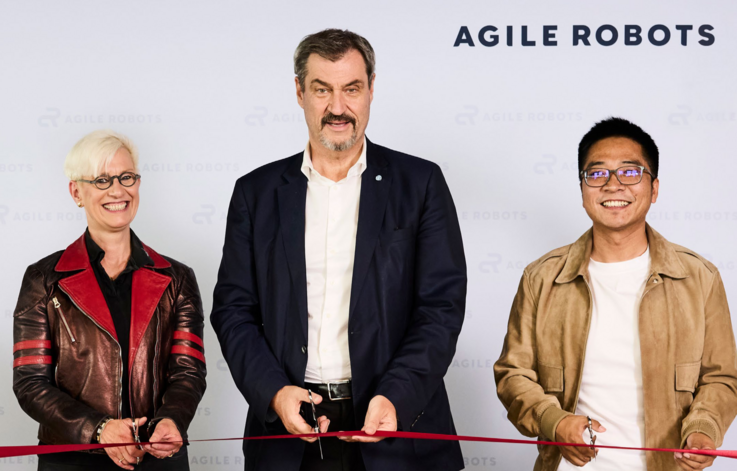
from left to right: DLR Executive Board Chair Prof. Anke Kaysser-Pyzalla, Bavarian Minister President Dr. Markus Söder andAgile Robots CEO Zhaopeng ChenPicture © DLR
atSTAKE: Using smart software to transform transportation in small municipalities
June 02, 2025
Rethinking traffic planning: three scientists want to use their software to help small municipalities make smart mobility decisions more quickly and independently. The start-up atSTAKE, founded by social scientist Kerstin Stark, psychologist Viktoriya Kolarova and traffic engineer Nina Thomsen, has developed an intelligent planning tool that replaces complex simulations - efficient, data-based and easy to understand.
The focus is on a clear claim: more sustainability, more social justice - and less dependence on large engineering firms. Local authorities in rural areas in particular should be able to plan better, for example when introducing on-demand buses or sharing services. Through precise demand forecasts, the software helps to use public funds in a more targeted manner and to expand public transport in an economically and socially sensible way.
atSTAKE was created as part of the “Helmholtz Enterprise” funding program, which makes it easier for founders from science to make the leap into business practice. The three researchers previously worked in transport research at the German Aerospace Center (DLR) - they used their practical experience to develop their vision of a tool that makes well-founded decisions for sustainable mobility more easily accessible.
“We are turning the conventional models on their head,” they say confidently - and by this they mean not only the technology, but also the claim to make transport planning more democratic, accessible and comprehensible. With their data-driven approach, they want to empower local authorities to plan in a self-determined and evidence-based way - and to make the mobility of tomorrow fairer.

from left to right: Dr. Viktoriya Kolarova, Dr. Kerstin Stark, Nina Thomsen. Picture © atSTAKE
Award for Citrapeutics: HZI spin-off wins at BioVaria 2025
May 05, 2025
The spin-off Citrapeutics, a spin-off of the Helmholtz Centre for Infection Research (HZI), was awarded the prestigious “Emerging Start-up” prize at BioVaria 2025 in Munich. The young company impressed the jury with a novel therapeutic approach in cancer immunotherapy: orally available inhibitors of the enzyme ACOD1, which strengthen the immune system and suppress the growth of tumors.
ACOD1 is active in many tumor cells and produces the molecule itaconate, which blocks cytotoxic immune cells such as CD8⁺ T cells and thus creates an immunosuppressive environment in the tumor tissue. Citrapeutics has identified and further developed citraconic acid (CA), the world's first ACOD1 inhibitor. These active substances offer an alternative or supplement to classic immune checkpoint inhibitors (ICI), which do not work for all patients and often cause severe side effects.
Under the leadership of Prof. Dr. Dr. Frank Pessler, the team aims to specifically treat cancers with high ACOD1 activity. The orally available active substances can be produced at low cost and already show promising pharmacological properties in preclinical studies. The project has been funded as part of the Helmholtz Enterprise Program since 2024. BioVaria brings together leading European research institutions, start-ups and investors every year to present innovative life science technologies and make spin-offs visible.
Further information can be found on the official BioVaria website: www.biovaria.org/startup-pitch-partner/startups-2025/startups-detail-view/citrapeutics

Nikolaos Chalkias, Ph.D. & Prof. Dr. Dr. Frank Pessler © BioM Biotech Cluster Development GmbH
MDC spin-off MyoPax receives EIC Accelerator funding for groundbreaking muscle regeneration therapies
February 20, 2025
The Berlin-based biotechnology start-up MyoPax, a spin-off of the Max Delbrück Center for Molecular Medicine (MDC) and Charité - Universitätsmedizin Berlin, has been selected as one of 71 companies for the prestigious EIC Accelerator grant.
MyoPax specializes in the development of innovative therapies for muscle regeneration using proprietary technologies for the isolation and cultivation of muscle stem cells. These make it possible to produce large quantities of high-purity muscle stem cells that can be used to treat muscle atrophy and injuries.
MyoPax was supported by the Helmholtz Enterprise funding program, which finances and supports selected start-up projects every year. This funding enabled the team led by Dr. Verena Schöwel and Prof. Simone Spuler to translate their research findings into practical applications and lay the foundations for founding a company. With the current EIC Accelerator funding, MyoPax plans to further advance the development of its therapies and initiate clinical trials to give new hope to patients with previously incurable muscle diseases.
This year, Helmholtz Enterprise is once again funding inventions within the Helmholtz Centers. Applications can still be submitted until March 28, 2025.
KIT and IBM launch strategic partnership for AI innovations
February 14, 2025
The Karlsruhe Institute of Technology (KIT) and IBM have agreed on a strategic cooperation in the field of generative artificial intelligence (AI) and digital innovations. The aim of this partnership is to jointly develop AI solutions that advance both scientific and industrial applications. As part of the cooperation, KIT will contribute its expertise in research and development, while IBM will provide advanced technologies and resources.
One focus is on promoting innovation through the transfer of research results into practice in order to accelerate technology transfer and open up new market potential. This collaboration underscores the Helmholtz Association's commitment to promoting knowledge and technology transfer through strategic partnerships and thus making a sustainable contribution to digital transformation.
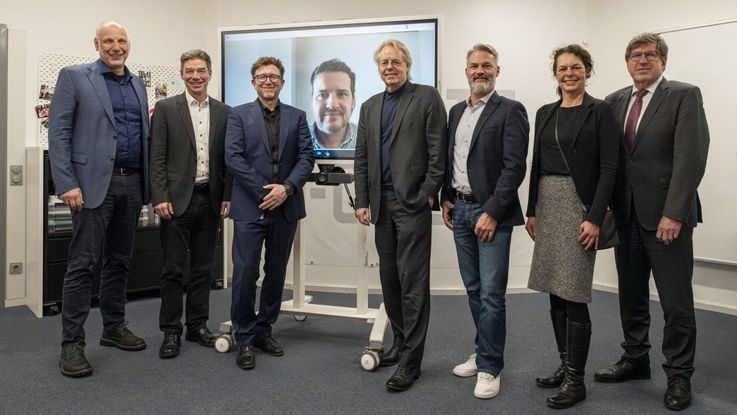
Extending their collaboration: Prof. Stefan Nickel (KIT), Prof. Michael Decker (KIT), Dr. Carsten Holtmann (IBM), Dr. Juan Bernabé-Moreno (IBM, virtually present on the screen), Prof. Jan S. Hesthaven (KIT), David Faller (IBM), Dr. Barbara Schmuker (KIT), Prof. Thomas Hirth (KIT) (from left to right; photo: Markus Breig, KIT)© Markus Breig, KIT
DLR spin-off EOMAP becomes part of Fugro
February 5, 2025
EOMAP GmbH & Co. KG, a former DLR spin-off, has been taken over by the Dutch company Fugro N.V.. EOMAP is a global leader in satellite-based mapping of water bodies and provides precise geodata for industry and authorities. In recent years, EOMAP has become an important partner of Fugro in many climate adaptation and nature conservation projects. The merger enables optimal integration of EOMAP's technologies into Fugro's existing solutions. This strengthens the global water market and expands the offering of both companies. The acquisition is a significant success for technology transfer from the Helmholtz Association. It shows how research can be transferred into successful companies and gain international relevance. Dr. Thomas Heege, founder of EOMAP, welcomes the merger as an important step towards scaling up their technology. This development underlines the value of scientific spin-offs for the economy and society. The Helmholtz Association congratulates EOMAP on this milestone. Translated with DeepL.com (free version)
DLR spin-off ensures safe interaction between robots and humans
January 8, 2025
The German Aerospace Center (DLR) has announced the development of a new robotic system designed to increase efficiency and flexibility in industrial production. The spin-off company Versatile Robotics GmbH is part of the DLR initiative “Factory of the Future”, which aims to revolutionize manufacturing processes through advanced robotics and digitization.
The new system features lightweight, torque-controlled robotic arms that mimic the movements of the human arm, enabling intuitive and safe human-robot collaboration. These robots can be easily reprogrammed for different tasks, making them suitable for the production of small batch sizes and individualized manufacturing.
The DLR Factory of the Future integrates the latest research in artificial intelligence and cooperative robotics to simplify and optimize production processes. By utilizing technologies originally developed for space travel, DLR aims to introduce innovative solutions to the manufacturing industry, thereby increasing productivity and adaptability.
In 2023, the project on compliant robot control was funded as a Field Study Fellowship as part of Helmholtz Enterprise. This funding program allows customer needs to be explored and interviews to be conducted. Projects and ideas are supervised by a professional coach. Sound exciting? Find out more about the program here:

© DLR Innovation & Transfer
DKFZ and Beiersforf - Collaborative Research for Next-Generation Sunscreens
December 11, 2024
The German Cancer Research Center (DKFZ) and Heidelberg University are jointly developing innovative approaches for the sunscreens of the future. Their research focuses on new compounds that not only protect against UV radiation but also repair DNA damage in skin cells, aiming to provide comprehensive protection against skin cancer.
This initiative combines expertise in dermatology, cancer research, and biochemistry to ensure the safety and effectiveness of these substances. In addition to skin cancer prevention, the new sunscreens will be designed to meet environmental and ecological standards. Close collaboration with industry partners aims to bring these innovations to market quickly.

© unsplash / Nataliya Melnychuk
Amplitude and HZDR Establish Joint Research Lab for Next-Generation Laser Technologies
December 11, 2024
The Helmholtz-Zentrum Dresden-Rossendorf (HZDR) and the Amplitude Laser Group are strengthening their 18-year collaboration by founding a joint research laboratory in Dresden. Building on the successes of the high-power DRACO laser, the partnership aims to advance laser diagnostics, technologies, and applications, focusing on electron and proton acceleration as well as radiobiological applications for cancer research.
To enhance the collaboration, Amplitude is relocating research and development resources from France to Dresden, funding PhD positions at HZDR, and establishing a local team. This partnership highlights Helmholtz’s commitment to translating research into applications and fostering international collaborations. The initiative is supported by Hi-Acts, the Helmholtz innovation platform for accelerator-based technologies.
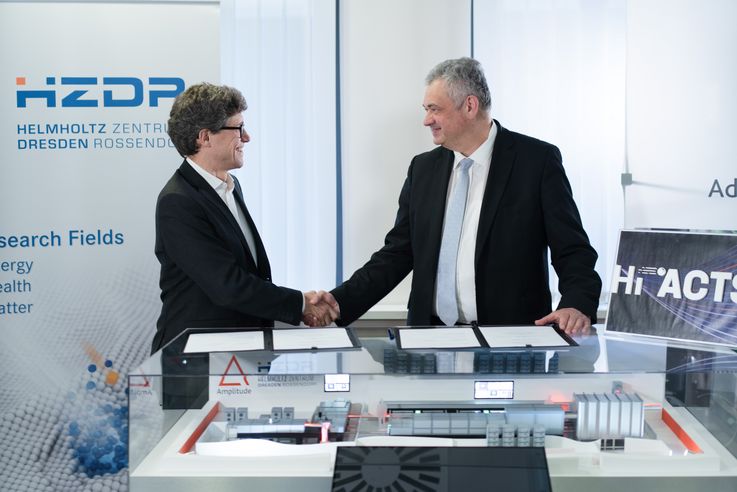
Signing the new cooperation agreement between HZDR and Amplitude: Damien Buet (left), CEO Amplitude Laser Group, and Prof. Sebastian M. Schmidt, Scientific Director at HZDR | © HZDR / K. Zheynova
KIT Spin-off INERATEC Wins German Sustainability Award in the Fuel Industry Category
November 27, 2024
Karlsruhe-based INERATEC, a spin-off of the Karlsruhe Institute of Technology (KIT), has been awarded the German Sustainability Award 2024 in the Fuel Industry category. The company was recognized for its groundbreaking contribution to sustainable energy solutions through its production of synthetic fuels using renewable energy and CO₂.
INERATEC's innovative reactor technology enables the efficient synthesis of e-fuels, offering a sustainable alternative to conventional fossil fuels. By utilizing captured carbon dioxide and green hydrogen, the company addresses key challenges in reducing greenhouse gas emissions, particularly in hard-to-decarbonize sectors like aviation and shipping.
This prestigious recognition underscores the importance of advancing clean energy technologies to achieve global climate targets. INERATEC continues to expand its production capacities, driving the transition to a climate-neutral energy system.
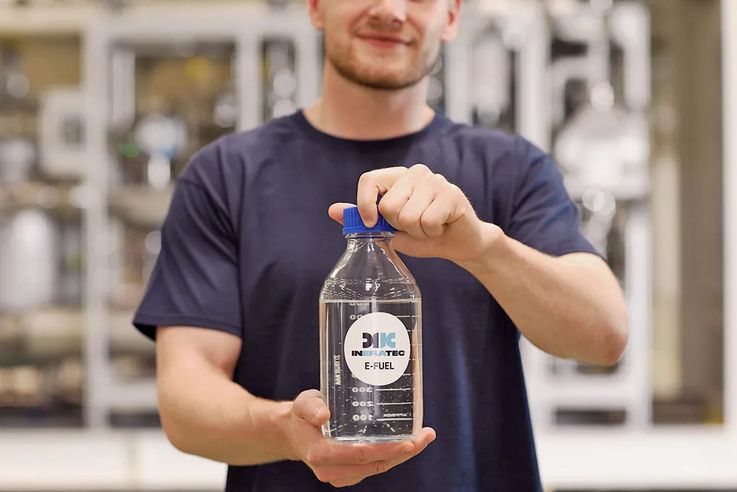
© INERATEC
39th Helmholtz Enterprise Selection Meeting funds six spin-offs and 15 Field Stury Fellowship projects
November 19, 2024
In the 39th intake pitches of the spin-off programme Helmholtz Enterprise, we have selected six new spin-offs and 15 inquisitive Field Study Fellowship projects together with our outstanding jury of VCs, business and science.
The teams will start in the new year and we are excited to accompany them on their entrepreneurial journey:
- EDY Diagnostics (DKFZ Deutsches Krebsforschungszentrum)
- KCP (Karlsruher Institut für Technologie (KIT))
- PoreX (Deutsches Zentrum für Luft-und Raumfahrt e.V.)
- DeKox (Helmholtz-Zentrum für Infektionsforschung)
- SideroGaIn (Helmholtz-Zentrum Dresden-Rossendorf (HZDR))
- SUNEO (Karlsruher Institut für Technologie (KIT))
Massive thanks to Alex Koch, Stephan Schulze, Leonie Erhard, Yann Fiebig, Thomas Grandke, Lea Bogner, Mirco Müller, Angelika Vlachou, Agnes von Matuschka, Daniel Steffen, Jan Elmiger und Jörn Krupa.
Apply by March 28, 2025 for a Field Study Fellowship to learn more about your future customers and their problems. Or apply for the Spin-off Program to turn your idea into a company.
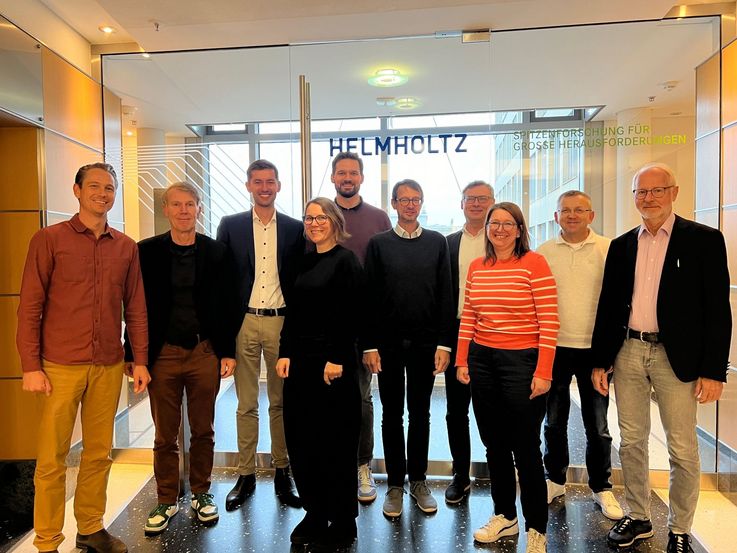
The jury team of the 39th selection meeting | © Helmholtz
DLR spin-off receives 1.7 million euros in funding
November 10, 2024
The spin-off project of the German Aerospace Centre (DLR) ExoMatter has successfully closed a pre-seed financing round of 1.7 million euros. The round was led by Vanagon.vc, with other investors including Bayern Kapital, 212 NexT, Bloomhaus Ventures AG, ZAKA VC and four female business angels from encourageventures e.V. ExoMatter uses an AI-powered platform to help companies develop new, high-performance and sustainable materials - up to 90% faster than conventional processes. This reduces costs and emissions and promotes sustainable innovation. According to Susanne Fromm from Vanagon Ventures, this technology helps companies to prepare for upcoming EU regulations such as the Ecodesign Directive. With customers such as Airbus and Infineon and a clear growth trajectory, ExoMatter aims to become the leading platform for digital material development in Europe. ExoMatter was funded as a DLR spin-off as part of Helmholtz Enterprise in 2022.

The Exomatter founding team Josua Vieten and Barbara Bachus | © ExoMatter
Helmholtz Centre DLR researches driverless trains
November 07, 2024
The German Aerospace Centre (DLR) is researching the use of driverless trains in regional rail transport as part of the "ARTE" (Autonomous Regional Train Evolution) project. The aim is to enable automated driving without extensive modifications to the railway infrastructure - simply by retrofitting the vehicles. As many routes are not equipped with the European Train Control System (ETCS), the trains should be able to recognise and interpret signals independently. Partners are the railway technology provider Alstom and the Technical University of Berlin. The DLR is comprehensively analysing how driverless operation can be integrated into the railway system and is investigating the effects on infrastructure, operating costs and the role of railway personnel, who will increasingly take on monitoring and control tasks in the future. The project is funded by the Federal Ministry of Economics and the Ministry of Economics of Lower Saxony.
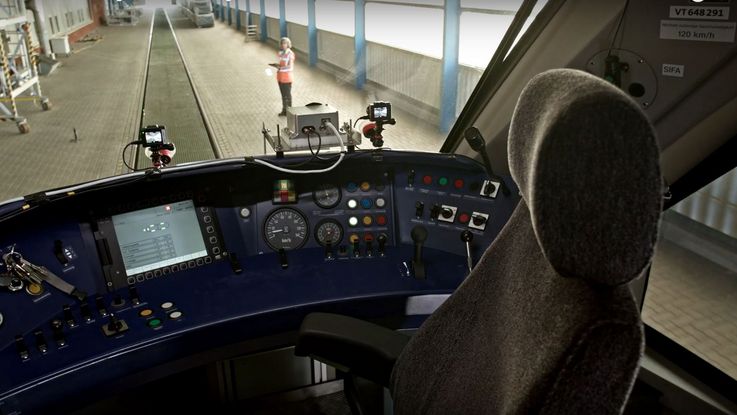
Autonomous Regional Train Evolution | © Alstom
Inspiring insights at the Start-up Days 2024 in Munich
October 25, 2024
From 17-18 October, more than 120 scientists and founders met at the Start-up Days 2024 in Munich to share their start-up ideas and experiences. Every year, the four major German research organisations Fraunhofer-Gesellschaft, Max Planck Society, Leibniz Association and Helmholtz Association plan this event to offer their researchers a platform for sharing and learning. Organised by the Max Planck Society, the event offered workshops and lectures on start-up topics such as financing, team building and market strategies. The panel discussion with experienced founders provided valuable insights into the everyday life and challenges of young companies. In addition to networking and knowledge transfer, the focus was on building lasting contacts. The next Start-up Days will take place in Berlin in 2025.

[Translate to Englisch:] Start-Up Days 2024 in München | © Sarah Oppenländer
DLR spin-off signs licence agreement
October 14, 2024
The Exploration Company (TEC) and DLR spin-off InSpacePropulsion Technologies (ISPTech) have signed a licence agreement. This enables TEC to use the green hypergolic propellant HIP_11 for its Nyx space capsule, which is scheduled to fly in 2027. HIP_11, developed by ISPTech's CTO Felix Lauck, offers advantages such as low toxicity, easy handling and cost efficiency. ISPTech, a DLR spin-off, specialises in environmentally friendly propulsion technologies. Nyx will initially be used for cargo missions, but will later also be able to transport people. ISPTech was funded as a DLR spin-off as part of Helmholtz Enterprise in 2022.
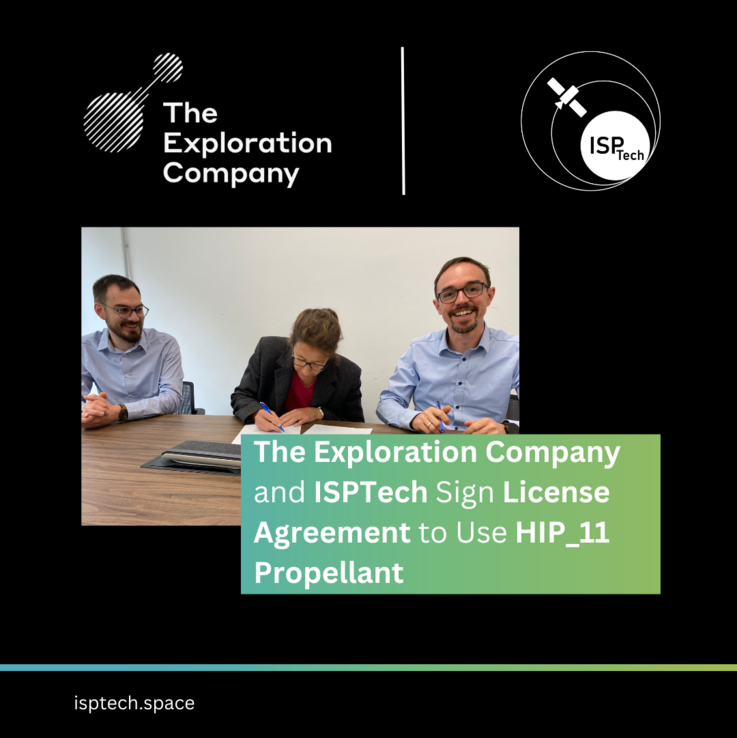
[Translate to Englisch:] Gründer Felix Lauck und Lukas Werling bei Vertragsunterschrift | © ISPTech
MDC and Bruker open co-creative Center of Excellence for single-cell omics
July 9, 2024
The Max Delbrück Center and Bruker, a leading analytical instrumentation company, opened their joint Innovation Center for Systems Medicine on July 8, focusing on the development of mass spectrometry-based single-cell and multi-omics technologies. The "MDC-Bruker Center of Excellence for Single Cell Omics" in Berlin, which we are funding as part of the Helmholtz Co-Creation Projects scheme, will provide researchers with access to Bruker's advanced technologies and expertise, while Bruker will gain clinical insights through the collaboration. The aim is to develop a multi-omics workflow that can analyze proteins, metabolites and lipids simultaneously. The project will enable researchers to better understand how diseases develop and progress at the cellular level by analyzing these body components at the single cell level. The consortium hopes that this will enable more precise medical diagnoses and treatments. The co-creative partnership is intended to generate new research partnerships and technological applications in the long term and also strengthen Berlin as a hub of innovation.
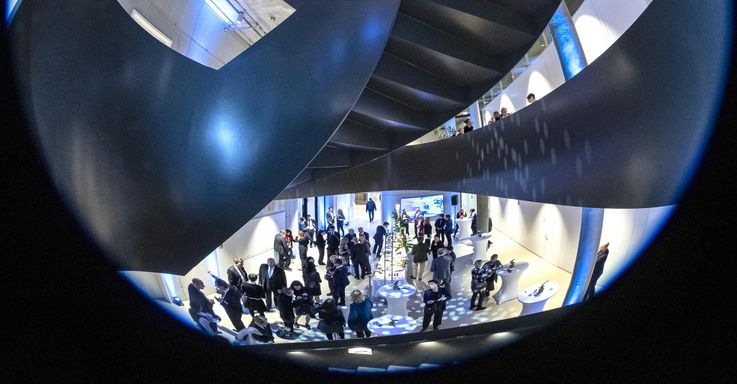
[Translate to Englisch:] Eröffnungsveranstaltung | © MDC
ISPTech raises 2 million euros for the further development of its propulsion technology for space vehicles
July 3, 2024
ISPTech, a spin-off of the German Aerospace Centre (DLR) and Helmholtz Enterprise-Alumunus, has received 2 million euros in pre-seed funding for its environmentally friendly propulsion technologies. These propulsion systems utilise non-toxic propellants and offer cost-effective, high-performance solutions for spacecraft ranging from small CubeSats to large satellites. The investor round was led by High-Tech Gründerfonds (HTGF), with participation from First Momentum Ventures and Possible Ventures. ISPTech's technologies, based on over 10 years of research, aim to make the space industry more sustainable and meet the need for affordable, reliable propulsion systems of this type. First deployments of the propulsion systems are planned for the end of 2025 to demonstrate their functionality and performance.

[Translate to Englisch:] Gründer Felix Lauck und Lukas Werling | © ISPTech
Heidelberg Epignostix GmbH, a spin-off from the German Cancer Research Center (DKFZ), has secured €4.3 million in seed funding to advance its AI-driven cancer diagnostics technology
July 02, 2024
The funding round was led by CARMA FUND I Capital GmbH & Co KG, with participation from High-Tech Gründerfonds, LBBW Venture Capital GmbH, and Start-up BW Seed Fonds.
The company's technology combines epigenetics with AI-powered bioinformatics to enable precise classification of cancer subtypes, particularly focusing on brain tumors. This approach utilizes DNA methylation patterns as genomic fingerprints and has been applied to over 150,000 patient samples.
Heidelberg Epignostix plans to launch its Heidelberg Brain Tumor Classifier as an approved diagnostic test by 2025, aiming to enhance diagnostic accuracy and patient care in line with WHO guidelines recommending methylation-based tumor classification.
"We are focusing on brain tumors first, where a sizeable patient population and high relevance in childhood cancer have already led to rapid adoption but will expand into other tumor indications quickly," said co-founder Felix Sahm.

MDC startup Captain T Cell raises €8.5 million for the development of their cancer treatment
May 24, 2024
Captain T Cell, a biotech startup from the Max Delbrück Center for Molecular Medicine (MDC), has raised €8.5 million in startup funding to develop T cell therapies for treating solid tumors. This funding round, announced on May 22, 2024, was supported by investors such as i&i Biotech Fund, Brandenburg Kapital, and HIL-INVENT, along with the German Federal Ministry of Education and Research. The funds will help advance their innovative T cell therapies towards clinical trials.
Captain T Cell focuses on creating first-in-class TCR-T cells designed to target tumors that current treatments can't effectively address. In preclinical tests, these T cells have shown the ability to completely eradicate aggressive tumors. The startup's proprietary TCR-ALLO platform aims to provide off-the-shelf treatment options for various cancers.
The company benefits from strong support and collaboration with the Max Delbrück Center and technology consultancy Ascenion. This funding will accelerate their mission to bring life-saving treatments to patients who need them most.
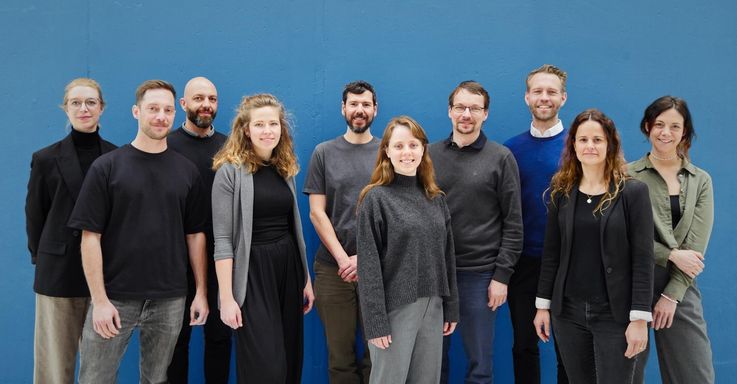
[Translate to Englisch:] © Captain T-Cell
Ocean data from commercial ships: Cooperation between SOOP and HX Hurtigruten Expeditions
May 16, 2024
The Helmholtz Innovation Platform "Shaping an Ocean Of Possibilities" (SOOP) and HX Hurtigruten Expeditions—a company specializing in sea expeditions to remote regions—have launched a cooperation to improve ocean observation. The goal is to conduct marine research not only from specialized research vessels but also from commercial ships. This project aims to help close data gaps in sparsely navigated ocean regions and enhance our understanding of the oceans. Additionally, passengers will gain unique insights into marine research and better understand its vital role in protecting our environment.
As part of this collaboration, various measuring devices have been installed on the expedition cruise ship MS FRIDTJOF NANSEN. During voyages from Hamburg to Reykjavik and across Norway, as well as the Shetland and Faroe Islands, these devices collect important data on sea temperature, oxygen content, salinity, microplastics, and CO2 levels. Furthermore, the project investigates how phytoplankton and eDNA (genetic traces in the water) can be used to assess biodiversity.
Dr. Toste Tanhua, coordinator of SOOP, emphasizes the importance of simple and standardized instruments for data collection to enable more comprehensive ocean monitoring. The cooperation with HX Hurtigruten Expeditions is a crucial step in testing and optimizing data collection on commercial ships.

[Translate to Englisch:] Messgeräte an Bord von MS FRIDTJOF NANSEN liefern Daten für die Wissenschaft. Foto: Espen Mills
Knowlege Transfer with SoftWert
April 4, 2024
The BMBF (Federal Ministry for Ecucation and Research) funded SoftWert project offers transfer agents a toolkit of methods for the commercial and non-commercial exploitation of scientific software. This toolkit addresses the tangible need of scientific organizations to establish suitable procedures for these exploitation processes.
In the project of the Deutsches Elektronen-Synchrotron (DESY), the Helmholtz Centre Potsdam - German Research Centre for Geosciences (GFZ) and the German Center for Neurodegenerative Diseases (DZNE) in cooperation with Saarland University and Atrineo AG, a transfer consulting and support provider, the project partners share their experiences, best practices and newly tested methods in an illustrative booklet and via the website softwert.org (only GER).

[Translate to Englisch:] © SoftWert
DLR spin-off Lumoview receives 2.5 million euro EIC Accelerator Grant
March 11, 2024
As one of 42 funded projects from a pool of 1083 applicants, the spin-off of the German Aerospace Center (DLR) was awarded funding from the European Innovation Council. With its EIC Accelerator Grant, the young company aims to expand further and make it easier for property owners to operate their buildings more energy-efficiently.
Lumoview Building Analytics GmbH manufactures measuring devices that can be used to measure and analyze individual rooms and entire buildings quickly and cost-effectively.
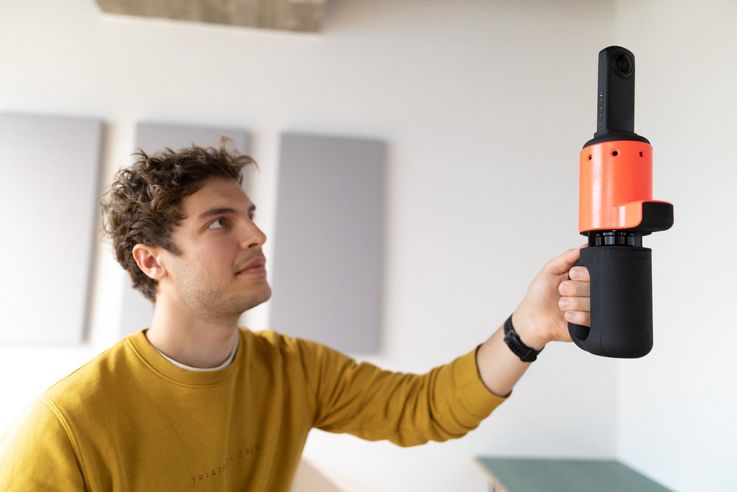
[Translate to Englisch:] © Lumoview Building Analytics GmbH
TherVacB - Helmholtz Munich's therapeutic vaccine against chronic hepatitis B enters the clinical phase
February 29, 2024
The therapeutic vaccine TherVacB against chronic hepatitis B, a liver disease that can lead to tissue damage and even liver cancer, developed under the leadership of Helmholtz Munich in the framework of a Helmholtz Proof-of-Concept Project, has reached the first clinical phase. Current treatments for chronic hepatitis B can reduce the viral load, but do not provide a cure for the approximately 296 million people infected worldwide.
The newly developed vaccine now has the potential to do just that: initial safety and immunogenicity tests have already been carried out in a phase 1a study on healthy volunteers in collaboration with the LMU Klinikum München and the University Medical Center Hamburg-Eppendorf. In a phase 1b/2a first-in-patient study, the safety and efficacy in patients with chronic hepatitis B will soon be tested in several EU countries.
[Translate to Englisch:] TherVacB Logo | Helmholtz Munich
Three Helmholtz Enterprise Alumni Spin off from GFZ in 2023
February 2, 2024
In 2023, the Helmholtz Centre Potsdam - German Research Centre for Geosciences (GFZ) recorded three new spin-offs, all of which are alumni of the Helmholtz Enterprise spin-off program: GreenGate Genomics, FOMON and fluxtec. The spin-offs underline the continuing positive trend towards start-ups at the GFZ, which has produced a total of 13 successful founding teams in the last six years. The spin-offs use technologies and patents developed at the GFZ and receive support from the GFZ Transfer Office.
GFZ press release with further information on the spin-offs →
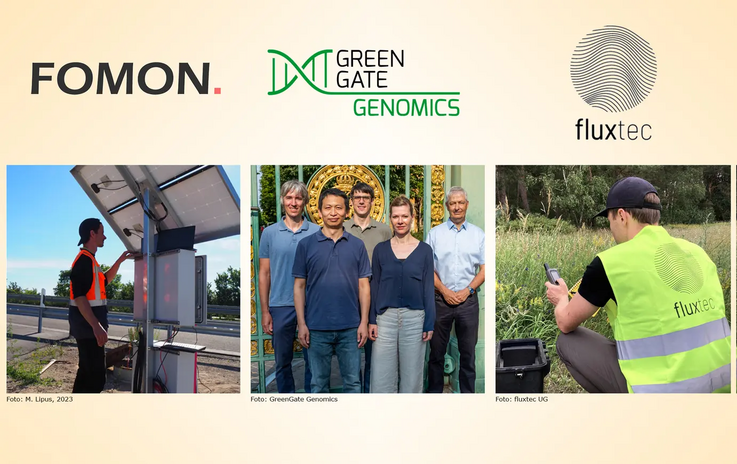
(GFZ | M. Lipus 2023, GreenGate Genomics, fluxtec UG)
Networking Event for Helmholtz Enterprise Spin-off Teams in Berlin
January 25, 2024
12 spin-off teams currently being funded by our Helmholtz Enterprise spin-off program from seven Helmholtz Centres met in Berlin on 23 January. They used the networking event to share their successes, challenges and best practices that have shaped the course of their spin-off projects so far. The event additionally gave them the opportunity to refine their sustainability strategies under the guidance of experts from ImpactNexus GmbH.

Members of 12 Helmholtz Enterprise Teams of KIT, HZI, DLR, MDC, DESY, FZJ und Hereon at the networking event in Berlin.
DLR Executive Board member Karsten Lemmer puts the spotlight on the testing of heat storage at DLR's large-scale Test Facility for Thermal Energy Storage in Molten Salt (TESIS)
January 7, 2024
In 2023, Germany achieved over 50% renewable electricity for the first time, a significant step forward for the energy transition. In order to be able to use electricity specifically when it is needed, research is now focusing in particular on storage technologies. Salt storage systems have the potential to store energy safely, efficiently, cost-effectively and over a long period of time. The German Aerospace Center (DLR) operates unique large-scale research facilities such as TESIS in Cologne, where molten salt storage systems are being tested on a megawatt-hour scale. In November 2023, DLR, and its partners Siemens Energy and Alfa Laval, received a grant of 6 million euros from the Federal Ministry for Economic Affairs and Climate Action (BMWK).
Projects such as TESIS show how Helmholtz, with the support of industrial partners and policy-makers, is putting research into practice in order to meet the challenges of climate change and secure Germany as a location for business.
LinkedIn post of Karsten Lemmer (Member of the DLR Executive Board) (only GER) →
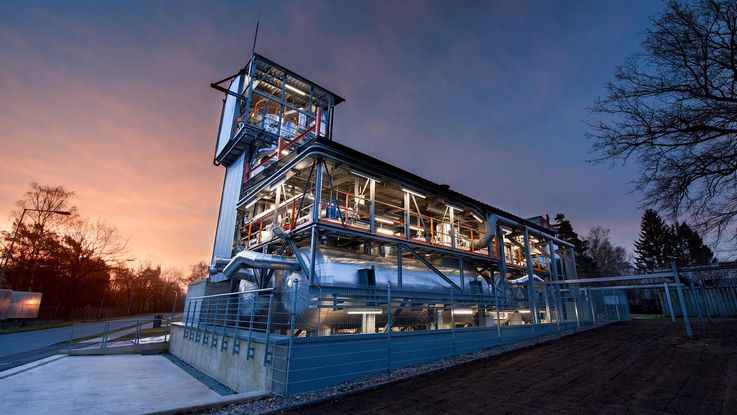
TESIS at DLR in Cologne. © DLR
The Pocketknife Transfer by SPRIND
November 28, 2023
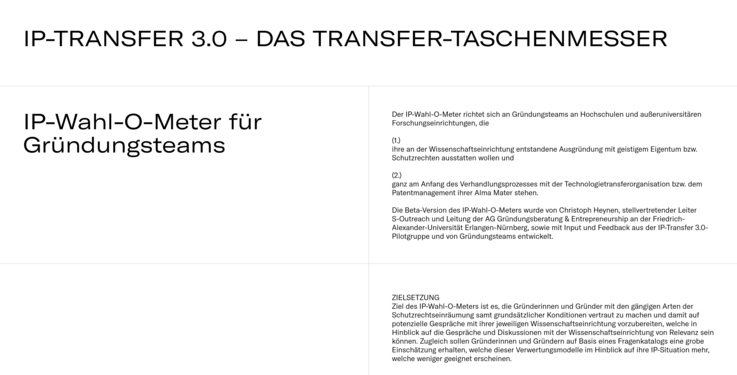
SPRIND presents the pocketknife transfer for start-up teams at universities and research institutions. It offers various tools with which the teams can prepare for discussions and negotiations on the evaluation and protection of intellectual property in the context of their spin-off. For example, the IP Wahl-O-Meter is designed to help them familiarize with different types of application models. The IP scorecard is designed to support them in IP evaluation and a database with model contracts for different IP transfer scenarios will serve as a reference point for participation agreements.
Helmholtz Enterprise Alumus Priavoid receives approval for a Phase II study of its drug candidate to combat Alzheimer's disease
November 28, 2023
The drug named PRI-002 has received approval for a Phase II trial from the European Medicines Agency (EMA). The study, called PRImus-AD, is being conducted by Priavoid, a Helmholtz Enterprise Alumus of Forschungszentrum Jülich (FZJ) and PRInnovation and it is funded by SPRIND. PRI-002 dissolves neurotoxic aggregates without immune system involvement. The Phase II trial aims to demonstrate efficacy in early Alzheimer's disease. Results are expected for 2026.
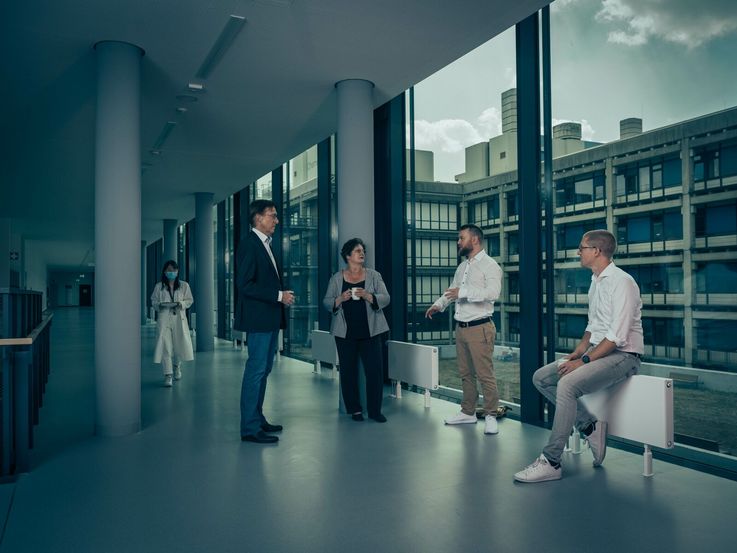
© SPRIND (f.l.t.r. Prof. Dr. Dieter Willbold, Dr. Dagmar Jürgens, Alexander Brener, Philipp Bürling)
Helmholtz Enterprise spin-off Marmorkrebs Bioproducts from DKFZ wins "German Food Startup Award"
November 25, 2023
On November 25, the Helmholtz Enterprise-funded spin-off Marmorkrebs Bioproducts from the German Cancer Research Center (DKFZ) won the "German Food Startup Award" at the innovate! Convention in Osnabrück. In the finale of a pitch competition, the team, consisting of Dr Vitor Carneiro, Prof Dr Frank Lyko, Dr Sina Tönges and Dr Ranja Andriantsoa, prevailed against their competitors.
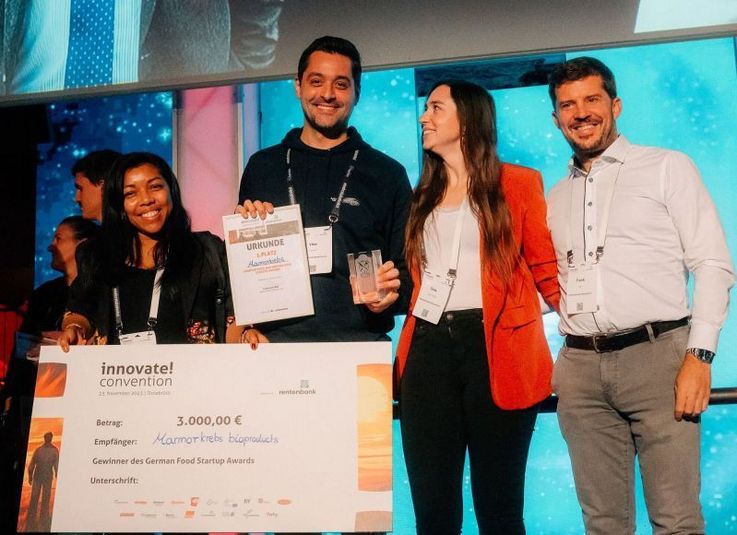
The Marmorkrebs Bioproducts team at the convention (left to right: Dr. Ranja Andriantsoa, Dr. Vitor Carneiro, Dr. Sina Tönges, Prof. Dr. Frank Lyko)
Venture Capital Fund Sustainable & Invest - Investment in Cybersecurity at CISPA
October 24, 2023
For the first time, seven startups from the Incubator of the CISPA - Helmholtz Center for Information Security applied for funding from the CISPA Venture Capital Fund during a Pitch Day. CISPA emphasizes that investments should not only aim for financial returns, but also for sustainable benefit to society. Cybersecurity in particular is crucial for this in an increasingly connected world.
Peter Memminger, Managing Director of Sustainable & Invest GmbH gives the following outlook after the event: "We will discuss our impressions and then seek talks with the particularly promising startups. This is about a long and hopefully successful journey together, where both sides need to feel comfortable with their partner. To that end, the Pitch Day was an important first step, followed by getting to know each other in more detail and due diligence."
The goal of the CISPA ecosystem is to create a strong community of research, startups and investors in the fields of cybersecurity and AI, to which the venture capital fund represents a further important building block.

© CISPA | ltr. Peter Memminger (Managing Director of Sustainable & Invest GmbH,), Max Wolf (Head of Startups & Entrepreneurship at CISPA)
Companies Receive the Opportunity to Test New AI Service Catalog at KIT for Free
August 21, 2023
The Smart Data Innovation Lab (SDIL) offers companies a service catalog for AI projects. Companies can select current AI methods and infrastructure from this catalog to support their innovations. SDIL, led by the Karlsruhe Institute of Technology (KIT), brings together AI experts from research and industry. The Federal Ministry of Education and Research (BMBF) is funding the development of the catalog until 2024.
Interested companies can apply with innovative AI project ideas in a total of three tender rounds. The prerequisite for application is that they can profitably exploit the "Innovation Services" offered - from the areas of large-scale language models, image recognition, embedded as well as data-saving AI - in their own products or processes. The application deadline for the second round of calls is September 20, 2023.
The projects selected by the SDIL steering committee will then be eligible for transfer services worth up to 50,000 euros, funded by the BMBF. In addition, there will be the use of up to 10,000 GPU hours on a high-performance GPU cluster operated by KIT, as well as cloud offers from industry partners.
More Information on the offer and the application process (only GER) →
KIT press release →

© Simon Raffeiner, KIT | With the service catalog, the researchers offer companies an exchange platform for technology transfer and IT competencies.
Helmholtz Enterprise Team InSpacePropulsion Technologies Pushes Sustainable Space Fuel Further Towards Market Maturity
August 21, 2023
Felix Lauck and Lukas Werling from the German Aerospace Center (DLR) are working on environmentally friendly alternatives to hydrazine (N2H4), which is used as a fuel for satellite engines in space travel. With their spin-off project InSpacePropulsion Technologies, which we support as part of Helmholtz Enterprise, the duo now aim to bring two promising alternative fuels to market:
One of the two fuels, HyNOx, has comparatively strong performance, is safe to handle and is inexpensive. The second technology, HIP_11, consists of a self-igniting fuel mixture. Both developments complement each other: "HyNOx is suitable for small and light satellites or spacecraft. HIP_11, on the other hand, offers advantages for larger and heavier spacecraft," explains Lukas Werling.

© DLR (CC BY-NC-ND 3.0) | In a dripping test, a drop of hydrogen peroxide falls into a small amount of fuel. HIP_11 reacts after the first contact of the two substances and ignition occurs within a few milliseconds. This self-igniting property is called "hypergol." HIP_11 was developed and patented as part of a doctoral thesis at the DLR Institute of Space Propulsion in Lampoldshausen.
2.Helmholtz Innovation Summit "Climate and Food Tech for Global Impact" in Israel
July 24, 2023
On July 18, numerous innovators and representatives from science and politics met in Tel Aviv for the second Helmholtz Innovation Summit. Three Helmholtz teams - Helmholtz Enterprise Alumnus Marmorkrebs Bioproducts (DKFZ), Phytonics (KIT) and the Valdiation Project Sorted! (AWI) - and three Israeli teams presented their work. The particular focus for the German teams was their existing or emerging collaborations with partners in Israel. A representative of the Consulting Office for Building-Integrated Photovoltaics (BAIP), one of our Helmholtz Innovation Labs, was also on site to meet with Israeli partners.
In addition, a discussion was held in the presence and with the active participation of the Federal Minister of Education and Research Bettina Stark-Watzinger, the President of Tel Aviv University (TAU) Prof. Ariel Porat and the Chairman of the Israel Innovation Authority (IIA) Dr. Ami Applebaum about the tools that governments and science organizations can use to better support sustainable innovation and collaboration between science and industry in the future.
About the innovators
![[Translate to Englisch:]](/assets/helmholtz_gemeinschaft/_processed_/a/4/csm_03_Tomer_Foltyn_2023_07_18_Helmholtz_Innovation_Summit_053_e76c44dcdc.jpg "[Translate to Englisch:]")
© Tomer Foltyn | The Summit took place at the Eco Building at Tel Aviv University.
HIPS and Saarland University Establish PharmaScienceHub
July 20, 2023
The Helmholtz Institute for Pharmaceutical Research Saarland (HIPS) and Saarland University (UdS) are strengthening their collaboration with the newly founded PharmaScienceHub. The goal is to accelerate the development of new drugs against infections, cancer and age-related diseases. The platform also promotes collaboration with the pharmaceutical and biotechnology industries at national and international level. With an investment of 70 million euros by the federal and state governments, knowledge and technology transfer will be accelerated and pharmaceutical research in the region will be strengthened.
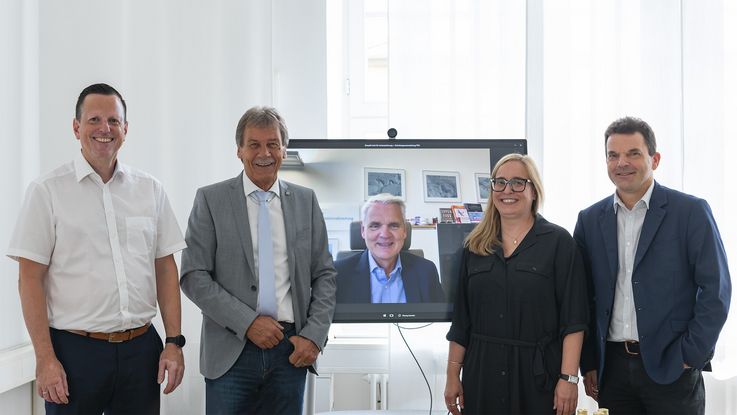
(left to right) Dr. Roland Rolles (Vice President for Administration and Business Management of the University), University President Prof. Dr. Manfred Schmitt, Prof. Dr. Dirk Heinz (Scientific Director of the HZI), Dr. Stephanie Thomas (HIPS Administrative Director) and Prof. Dr. Rolf Müller (Scientific Director of the HIPS). © Jörg Pütz/UdS
Leopard Biosciences about to spin off with innovative point-of-care test
July 17, 2023
Leopard Bioscineces from the Helmholtz Institute for RNA-based Infection Research (HIRI) at HZI receives more than one million euros to support the commercialization of their innovative diagnostic technology. The platform is based on groundbreaking research results in the field of the CRISPR system and enables the simultaneous detection of multiple RNA and DNA biomarkers in a single point-of-care test. Funding is provided by the Helmholtz Enterprise Program and the Helmholtz Validation Fund. The technology holds the potential to optimize medical decision-making processes and could have particular application in resource-constrained settings. The team, led by Chase Beisel, will spin off in the coming months. Their goal is to become a leading player in point-of-care molecular diagnostics.
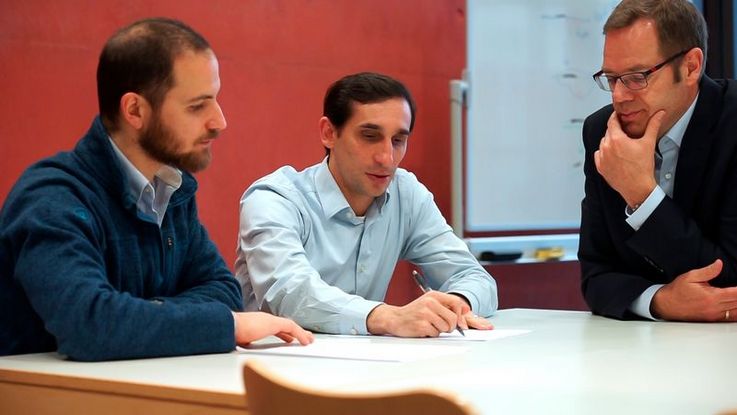
© HIRI |The Leopard Biosciences team (left to right): Costas Patinios, Chasel Beisel, Mikkel Noerholm
Nunos Impresses the Audience at the AgriFood Network Summit
July 12, 2023
The Helmholtz Enterprise spin-off Nunos from the German Aerospace Center (DLR) was able to convince the audience of the Growth Alliance's AgriFood Network Summit on July 6 of its natural farm manure treatment and was awarded €5,000 for it.
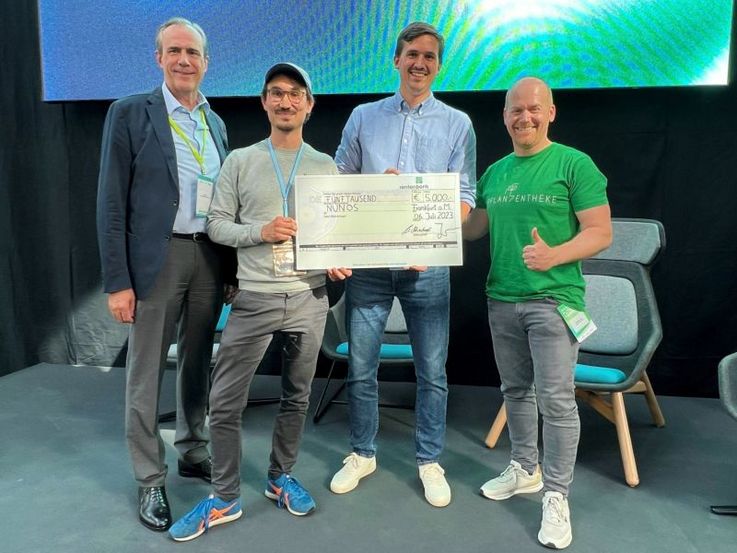
© Nunos | The Nunos team at the award ceremony
DKFZ and Beiersdorf Establish Joint Innovation Lab for Enhanced Skin Cancer Prevention
July 10, 2023
The German Cancer Research Center (DKFZ) and skin care products manufacturer Beiersdorf established a Joint Innovation Lab on July 1, 2023 to research the epigenetic clock of skin cells. The interdisciplinary collaboration between skin biologists and cancer researchers will enable molecular approaches to prevent skin cancer. By exploring epigenetic changes and developing targeted active agents, the Lab aims to develop innovative strategies for skin cell rejuvenation and cancer prevention. The Joint Innovation Lab is supported with a budget of 4.8 million euros for four years and offers a promising platform for pioneering research in the field of skin aging and cancer prevention.
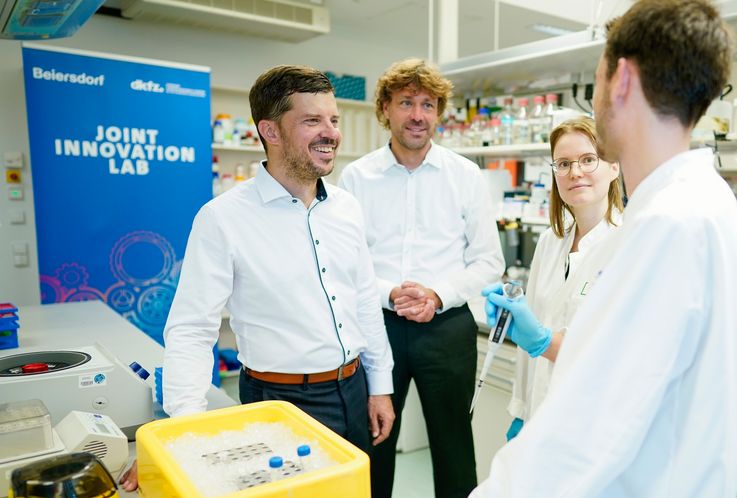
Frank Lyko, DKFZ (left), und Marc Winnefeld, Beiersdorf (2nd from left) © U. Anspach/DKFZ
HZDR and Semiconductor Manufacturer GlobalFoundries Strengthen Partnership for Knowledge Transfer and Welcome Culture
June 30, 2023
On June 28, the Scientific Director of Helmholtz-Zentrum Dresden-Rossendorf (HZDR), Prof. Sebastian M. Schmidt, and the Managing Director of GlobalFoundries Dresden, Dr. Manfred Horstmann, signed a memorandum of understanding. In it, both parties agree on a series of measures to strengthen joint knowledge transfer, technology development and the promotion of young scientists. In the future, for instance, there will be more joint training courses and networking events, as well as closer exchange in joint research on memory and information technologies and, in particular, on neuromorphic chips (i.e. chips modeled on the human brain). By the time the agreement expires at the end of 2025, both parties intend to transform the memorandum of understanding into a long-term cooperation agreement.
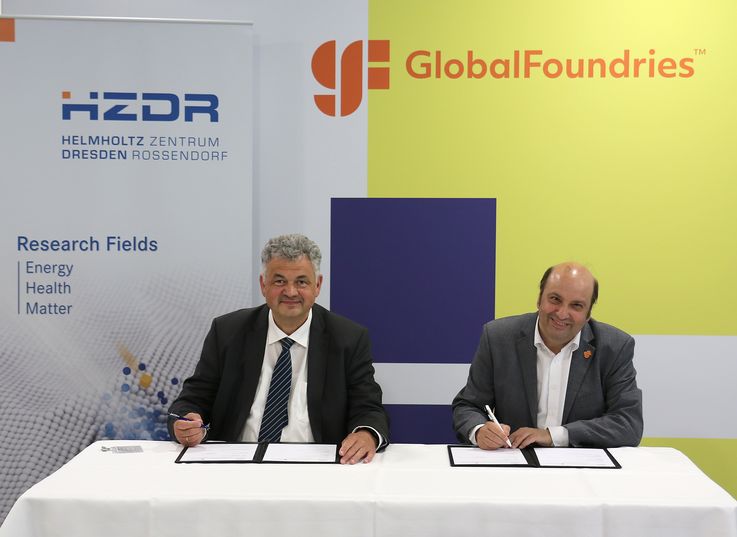
[Translate to Englisch:] © GlobalFoundries | Scientific Director of Helmholtz-Zentrum Dresden-Rossendorf (HZDR) Prof. Sebastian M. Schmidt and CEO of GlobalFoundries Dresden Dr. Manfred Horstmann
Helmholtz Transfer Academies Kick-off
April 19 2023
Five Helmholtz Transfer teams met in Berlin on April 19th to kick off their brand new Helmholtz Transfer Academies together.
Over the next two years, 12 centers will join forces in five academies to transform the way people think about transfer and innovation at Helmholtz. Ranging from sensitizing workshops for new members of staff to about-to-found spin-off consulting for sciencepreneurs, the academies aim to build lasting structures both within the individual centers and throughout the entire association, further uniting the Helmholtz family.
In collaboration with the Stifterverband, our teams took the opportunity to further refine their understanding of their target groups and the outcomes they want to achieve, and share their ideas with each other.
We look forward to seeing how their hard work will pay off in the upcoming months and cannot wait for the feedback of the participants.
4Investors - Four big research organizations host joint Investors Day
30 March 2023
This year, the four major non-university research organisations in Germany - Helmholtz, Fraunhofer, Max Planck and Leibniz - organised a joint investor event for the first time. On 29 March, a total of 40 spin-off teams from all organisations had the opportunity to show an audience of about 90 investors in Munich's Kohlebunker how their innovations will influence all of our lives in the future. For this purpose, they first stood on the big stage for pitches, before meeting personally with individual investors.
Helmholtz was represented by eleven teams, who showcased both their innovative research and their entrepreneurial successes in the fields of medical technology, materials development and energy storage, among others:
- Alteva (DLR)
- CARTemis Therapeutics (MDC)
- FastCast Ceramics GmbH (KIT)
- fuse.space GmbH (CISPA)
- GreenDelta (DLR)
- Holy Technologies (DESY)
- Leopard (HZI)
- MACROCARBON (AWI)
- neomento GmbH (DZNE)
- TRYPTO Therapeutics (MDC)
- ViroCas13 (Munich)
In addition to the financial boost for our teams, we are particularly excited about the new contacts and the resulting partnerships that will contribute to solutions for the major problems of our time.

The Helmholtz-Team at the Invesotors Day
KIT Spin-off Phytonics receives million-euro funding
17 March 2023
Phytonics, a spin-off of the Karlsruhe Institute of Technology (KIT), has secured a seven-figure sum in a financing round. The company has developed a coating for photovoltaic modules that, in addition to a ten percent increase in energy production compared to conventional coatings, also has the advantage of being glare-free. This makes it possible to open up new areas for photovoltaic modules, such as the surroundings of airports and railway tracks, where they were previously undesirable or prohibited due to their strong reflection of incoming light.
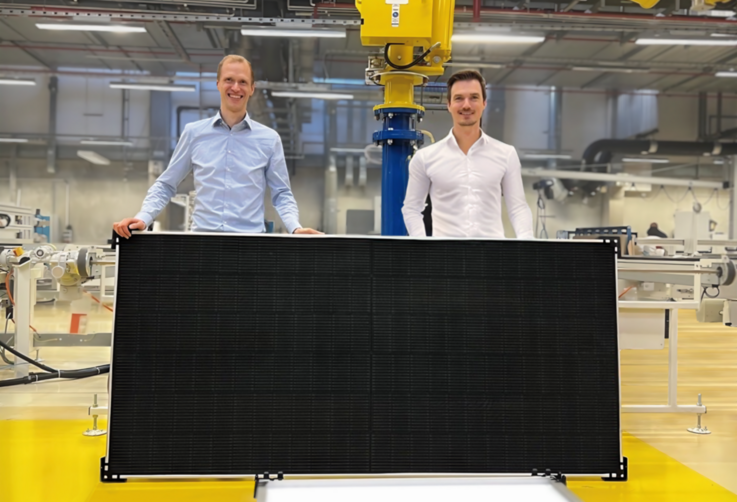
[Translate to Englisch:] © Phytonics/KIT
HE alumnus Myopax receives seven million euros for cell therapy treatment
1 March 2023
Myopax, a start-up based in Berlin and Copenhagen, is researching cell and gene therapy treatments for muscle diseases. The Helmholtz Enterprise alumnus of the Max Delbrück Center was able to secure strong support for the transfer of its research into application with seven million euros from the German Ministry of Education and Research, the Helmholtz Validation Fund (HVF) and the Danish Bioinnovation Institute. The team is currently planning a human trial in which their new treatment method for bladder exstrophy-epispadias, a rare disease of the bladder sphincter, is to prove itself. Stem cells from the patient's muscle tissue are multiplied outside the body and then injected into the diseased area in order to specifically build up the muscle there. The team's goal is to scale the process up to industrial production. The resulting reduction in costs should make the procedure interesting for profit-oriented companies, among others, and thus more accessible to patients.

Myopax founders Simone Spuler and Verena Schöwel-Wolf | © Myopax
OPTSAL camera system supports situational awareness in earthquake zone
7 February 2023
Two employees of the DLR Institute of Optical Sensor Systems traveled to Turkey together with their cooperation partner I.S.A.R. Germany to support the emergency forces in the earthquake area with aerial image data. The camera system used for this purpose, which is installed in a drone, was developed by the Helmholtz Innovation Lab OPTSAL of the German Aerospace Center (DLR).

Aerial photo of the earthquake area
CISPA Transfer Team shares insight about their work
19 January 2023
The Transfer Team at Helmholtz Center for Information Security (CISPA), represented by Max Wolf and Nicole Ziesche, presents a selection of their transfer activities. They give insights into the transfer mindset at the centre in Saarbrücken and proudly present the CISPA Innovation Campus. It will allow founders and researchers, in addition to the Centre's traditional support, to receive target-oriented training and to get in touch with investors and companies in order to strengthen individual and demand-oriented cooperation between science and business in the region.

Nicole Ziesche and Max Wolf , Foto: CISPA
Gérard Krause (HZI) honoured for his contriburtion to SORMAS
17 January 2023
Epidemiologist Gérard Krause of the Helmholtz Centre for Infection Research (HZI) receives the Translational Infection Research Award of the German Centre for Infection Research (DZIF). With his work on the epidemic management system SORMAS, he and his colleagues have contributed significantly to the fight against Lasse fever, monkeypox and COVID-19. In Germany alone, more than 130 health authorities are already using SORMAS.
SORMAS is being supported by our Spin-off Programme (HE).

Prof. Gérard Krause, Photo: HZI/Verena Meier
2.5 Million Euros for AI Start-up Quantpi
15 December 2022
The Saarbruecken-based AI startup Quantpi has successfully raised €2.5 million in a pre-seed round. The young company, which emerged from CISPA (Helmholtz Center for Information Security), plans to use the money to further expand its team and advance the commercial application of its QuantPi platform. It makes decision-making processes of artificial intelligences more transparent and comprehensible. The company's goal is to open up new fields of application for AI and to counter the mistrust of "black-box" AI, whose decision-making processes are often inaccessible to human actors.
FZJ Spin-off successfully tests Alzheimer's drug
19 October 2022
The team at Priavoid, a spin-off of Forschungszentrum Jülich (FZJ) and Heinrich Heine University Düsseldorf, is working on the development of an Alzheimer's drug. Recently, they successfully completed their first clinical trial with people suffering from the disease.
Helmholtz-INERATEC e-Fuels win 1st prize at the EARTO Innovation Awards
17 October 2022
In cooperation with INERATEC, a spin-off of the Karlsruhe Institute of Technology (KIT), Helmholtz was awarded the first prize in the "Impact Delivered" category of the Innovation Awards of the European Association of Research and Technology Organizations (EARTO). The award was given for sustainable e-fuels and chemicals that are both compatible with existing infrastructures and vehicles as well as modular (and thus easily scalable). As sustainable substitutes for fossil fuels, they are already contributing to a reduction in CO2 emissions.

Tim Boeltken, co-founder of INERATEC at the award ceremony in Brussels
Knowledge Transfer of the SECUSO Research Group at KIT Awarded Federal Prize for Consumer Protection
12 October 2022
The SECUSO (SECurity, USablility, and SOciety) research group of the Karlsruhe Institute of Technology (KIT) helps citizens identify which apps and web offers can be trusted to handle their data. On their website, they provide free information material and digital tools for protecting data and privacy online. On September 26, German Consumer Protection Minister Steffi Lemke honored them with the award of the German Foundation for Consumer Protection (DSV) for their services.

Left: Steffi Lemke, Minister for Consumer Protection; right: Peter Mayer, KIT (photograph: German Foundation for Consumer Protection
ELISE secures 14.5 million euro investment
12 September 2022
The team of ELISE GmbH of the Alfred Wegener Institute was able to convince a number of investors of the merits of their project and secure a 14.5 million euro investment for their company. The Helmholtz Enterprise Alumni have made their vision of "connected engineering" a reality: With the help of an intuitive programming language (low code), they are already enabling engineers to save up to 90% of the time needed to develop all kinds of technical components via their platform. Their goal is now to further expand it to become the low-code standard in engineering.
More about ELISE on their website and in this AWI press release
![[Translate to Englisch:]](/assets/helmholtz_gemeinschaft/_processed_/a/e/csm_Left_to_right_Daniel_Siegel__Dr_Moritz_Maier__Sebastian_Moeller_46d06c6ca2.jpg "[Translate to Englisch:]")
Founding team Daniel Siegel, Dr. Moritz Maier and Sebastian Moeller
Contacts

Dr. Andreas Bergner
Head of Department Transfer and Innovation

Dr. Julian Alexandrakis
Manager Transfer und Innovation