One of 48.000
Three Questions for Doreen Kohlbach
Picture: AWI
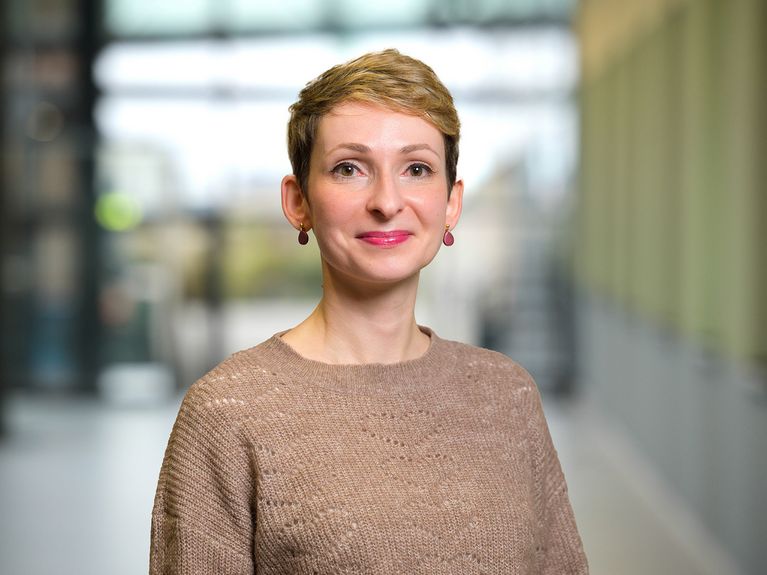
Doreen Kohlbach is a marine biologist at the Alfred Wegener Institute, Helmholtz Centre for Polar and Marine Research.
What is the most exciting part of your job?
I’m a marine biologist and I study how climate change is altering polar ecosystems – particularly the decline in sea ice and the increasing exposure of marine organisms to pollutants. In remote regions such as the Central Arctic, microplastics and organic hydrocarbons have hardly been studied, so there are still genuine discoveries to be made there. What I love about my work is that it’s socially relevant, since pollutants in marine organisms are passed on and accumulate along the food chain, making them a significant concern for the consumption of edible fish as well. I also value the (international) collaboration with colleagues and the joint development of new ideas. And, of course, expeditions to the polar regions are an absolute highlight – visiting places that hardly anyone else ever sees
If money and time weren't an issue, what would your next project be?
Many ideas often fail not because of a lack of creativity, but due to a lack of time and funding. I would like to bring more early-career researchers into my group so that we could tackle multiple research questions at the same time – and above all, because they bring fresh perspectives. At the same time, I’d like to give them the opportunity to experience the largely untouched polar regions firsthand and thus find their own genuine passion for polar research. Modern analytical methods are also a limiting factor: the equipment is expensive and requires constant maintenance. With more funding, we at the Alfred Wegener Institute could establish new technologies and more quickly make significant advances on key questions, such as those related to pollutants. A large-scale international project on pollution in the polar regions – with extensive access to samples and resources, as well as close scientific collaboration – would be particularly appealing
Who would you like to have dinner with, and what would you talk about?
I find interacting with young people particularly inspiring – including my son, who wants to become a polar researcher himself. Conversations with children and students are often surprising because they ask questions without any preconceptions, take climate change seriously, and offer completely new perspectives. Many young people today want to learn more about current research, especially into the consequences of climate change, so they can better understand their own future and play an active role in shaping it. I find this curiosity and enthusiasm both enriching and inspiring – it shows just how important it is to make science understandable and accessible.


Readers comments