One of 48.000
Three Questions for Connie Hoe
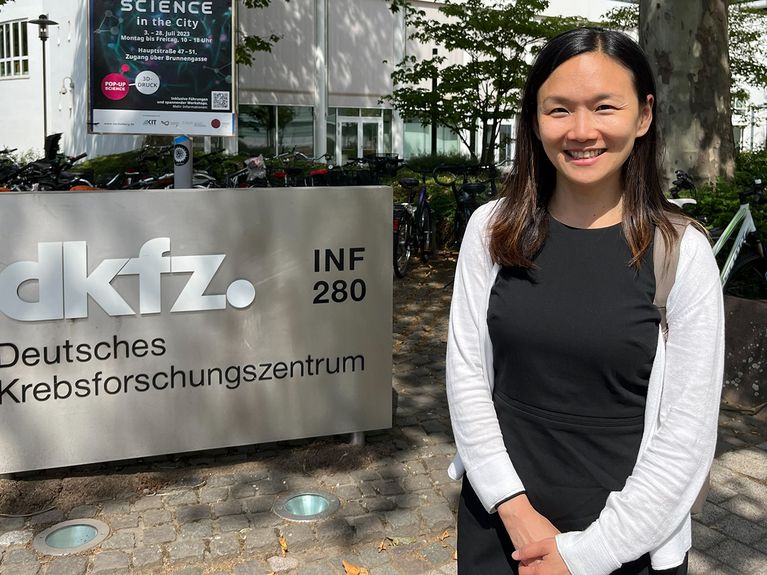
Picture: DKFZ
Connie Hoe is a Public Health Expert and Division Head for Policy & Implementation Research at German Cancer Research Center (DKFZ).
What's the most exciting part of your job?
I am a public health researcher studying what helps or hinders the translation of scientific findings into policy and practice. What excites me most about my job is its potential to make a real-world difference in cancer prevention. Achieving that impact requires transdisciplinary collaboration, bringing together people from different fields and backgrounds, learning from different perspectives, and asking not only whether a given intervention works, but also how, for whom, and under what conditions it can be successfully implemented in practice. I find this combination of research, policy, and practice particularly exciting, because it challenges us to think beyond generating findings and consider how we can use them to actually improve public health.
If money and time weren't an issue, what would your next project be?
I would love to explore how we can better engage and mobilize citizens when it comes to cancer prevention, and whether this can ultimately help drive policy change. Cancer prevention research has often focused on how policymakers, health systems, and public health interventions influence individual behavior. Although there is an established body of literature on advocacy, public participation, and community engagement, we know far less about how informed and engaged citizens can shape policy environments for cancer prevention. My dream project would bring together public health, behavioral science, political science and communication to explore how we can create a stronger societal demand for effective cancer prevention policies.
Who would you like to have dinner with, and what would you talk about?
Whenever I’ve been asked this question before, my answer has always been Barack Obama. I’ve always admired his ability as an orator, particularly the way he can communicate complex ideas in a way that feels clear, engaging, and relatable to highly diverse audiences. I’d love to ask him what advice he would give scientists about communicating their work beyond academia and making evidence resonate with people from different backgrounds and perspectives. I’d also be fascinated to hear how he approaches difficult decisions and manages to find common ground when there are competing views and priorities. And, on a lighter note, I’ve always found him very funny, so I imagine there would be plenty of laughter alongside the more serious conversation.



Readers comments