One of 48,000
Three questions for physician Freba Grawe
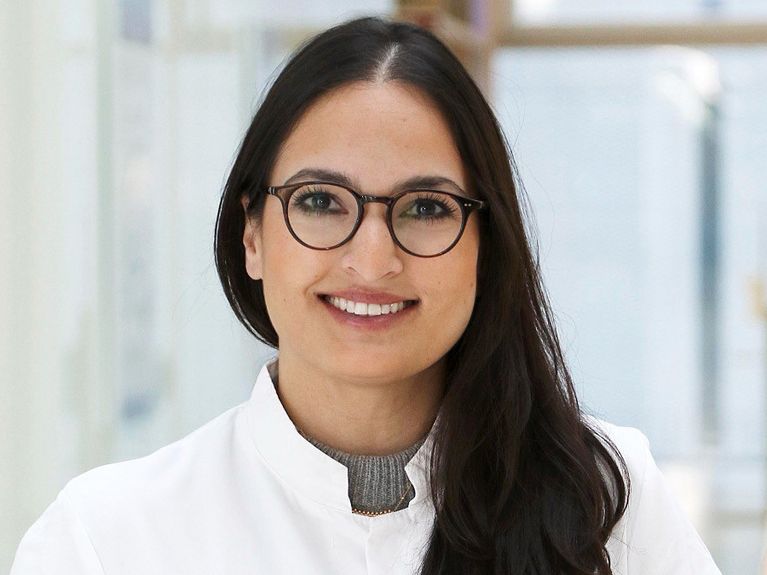
Image: DKFZ
Freba Grawe is the director of the DKFZ-Hector Young Researchers’ Clinical Collaboration Unit “Translational Molecular Imaging in Oncologic Therapy Monitoring” at the DKFZ-Hector Cancer Institute at the University Medicine Mannheim.
What is the most exciting part of your job?
The most exciting moment is when, after years of development, we see a patient’s scans for the first time after administering a new radiopharmaceutical: Does it actually make its molecular target in the tumor visible? Does it show early on whether a therapy is working? If such imaging findings are confirmed in additional patients, this can lead to the development of a biomarker that meaningfully changes the available treatment options. When this happens, preclinical development and clinical translation become an essential tool for determining the best, individualized therapy, and what was initially an abstract research concept becomes a tangible, potentially life-saving benefit for patients.
If money and time were no object, what would your next project be?
I would develop a molecular navigation system for cancer therapies. Targeted drugs such as antibodies and antibody-drug conjugates would be radioactively labeled and tracked using whole-body PET. This would allow us to determine before treatment begins whether a drug could reach all tumor sites, and to assess early on whether it was effective. To make this possible, I would create an international platform that integrated radiochemistry, imaging, tumor biology, and clinical trials, and that transferred new radiopharmaceuticals from the lab to clinical use – in collaboration with partners from academia, clinical practice, and industry. The goal: to find the best, individualized therapy for each patient more quickly.
Who would you like to have dinner with, and what would you talk about?
With Barack Obama. I’m impressed that he launched the Precision Medicine Initiative as early as 2015 with the goal of finding the right treatment for every person at the right time. That’s exactly what we’re working on in nuclear medicine: using molecular imaging, we seek to determine which therapy is right for which patient and whether it’s effective. Over dinner, though, above all I’d ask him how he managed to inspire people to embrace a shared vision. In a campaign speech, he once quoted a line from the poet June Jordan: “We are the ones we’ve been waiting for.” I’d ask him how we could maintain this mindset in science and leadership. Because progress begins when we stop waiting for others and take responsibility ourselves.


Readers comments