Longevity
How Long Can We Live?
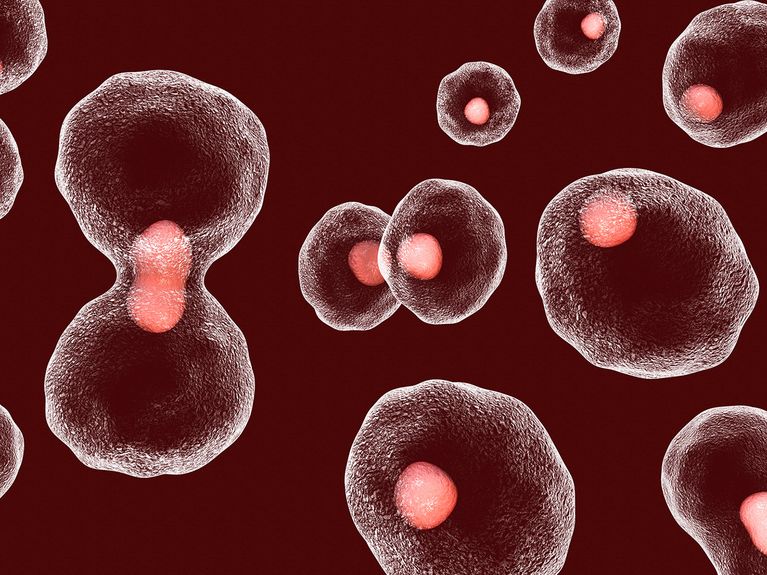
Telomeres—the protective caps at the ends of chromosomes—shorten with age and with every cell division. Image: picture alliance / Science Photo Library | KATERYNA KON
Many promises of longevity do not hold up to scientific scrutiny. Yet some factors can influence healthy lifespan—if we take a holistic view of the entire body.
122 years and 164 days. That’s how old Jeanne Calment of France lived to be—the oldest person whose age has ever been reliably documented. It was an incredibly long life. And yet even her life eventually came to an end. No one can defeat aging indefinitely. The longevity movement is trying to push this limit further out. Fasting regimens, dietary supplements, ice baths, and infusions promise a longer life. But which of these actually stand up to scientific scrutiny?
“It’s not primarily about extending life. It’s about increasing the number of healthy years of life,” says Monique Breteler, Director of Population Health Sciences at the German Center for Neurodegenerative Diseases (DZNE) and head of the Rhineland-Study, which we will return to later. This is precisely where modern longevity research comes in. It is not looking for a single miracle pill against aging. Instead, it seeks to understand which biological processes cause the body to age—and where intervention is actually possible.

Monique M. B. Breteler, Director of Population Health Sciences at the German Center for Neurodegenerative Diseases (DZNE). Image: DZNE
That the path is more complex than many longevity promises suggest is also demonstrated by the research of Martin Hrabě de Angelis, Director of the Institute of Experimental Genetics at Helmholtz Munich and holder of the Chair of Experimental Genetics at the Technical University of Munich. In one study, his team, together with researchers from the DZNE and the German Center for Diabetes Research (DZD) investigated three approaches considered potential levers: first, the now widely known practice of intermittent fasting; second, interventions in a cellular metabolic pathway that appears to play an important role in cellular aging; and third, a signaling pathway involving growth hormones that has been linked to longevity in animal models. The result: “Individual age-related measures—such as those related to physical activity, metabolism, or the immune system—did appear more favorable. However, the aging process as a whole was not noticeably slowed,” says Hrabě de Angelis.
The study makes one thing clear: Aging is not a single biological process that can be halted with a single intervention. Different organs and body systems age at different rates and influence one another. According to Hrabě de Angelis, the basic principle is: “We cannot measure aging solely by whether an organism lives longer. We have to look at the entire body—just as we would in a comprehensive health checkup. Only when many areas of physiology are considered together can we see whether an intervention truly affects the aging process or merely produces isolated health-promoting effects.”
At first, this sounds sobering: the single “switch” that reliably extends life has not yet been found. Yet research confirms that we can delay aging through a healthy lifestyle: plenty of physical activity, a healthy diet, as little stress as possible, and sufficient sleep.
Determining the extent of the effects of physical activity—not in mice, but in humans over many years—is extremely challenging. Its effects on the body are highly complex: it simultaneously influences muscles, blood vessels, metabolism, the immune system, and the brain. One of the few studies worldwide capable of investigating such effects is the Rhineland Study at the German Center for Neurodegenerative Diseases. It has been running in the Bonn area since 2016; more than 15,000 people are already taking part, with a long-term target of approximately 20,000 participants. It aims to gain a better understanding of the genetic and environmental factors that enable people to age healthily and, on this basis, to develop strategies to prevent age-related diseases.

Martin Hrabě de Angelis. Image: Helmholtz Munich
What makes the study unique is that participants do not undergo just a single examination; instead, they return to the study centers every few years. There, researchers collect data on blood, urine, cardiovascular parameters, physical fitness, lifestyle, diet, hearing, vision, memory, brain structure, and more. “The study is designed to run for decades,” says Monique Breteler, who leads the Rhineland Study.
An association with physical activity has already been observed: In an analysis of more than 3,500 participants, people who were more physically active were epigenetically younger. Epigenetics refers to chemical modifications of the genetic material that do not alter the DNA sequence itself but can influence how strongly particular genes are expressed. Certain patterns of these modifications change so reliably with age that researchers can use them to derive biological aging clocks. The Rhineland Study showed that physical activity was associated with a younger profile according to these aging clocks. Part of this association could be statistically explained by the fact that more physically active people also had more favorable immune and cardiovascular markers—in other words, fewer signs of the processes that appear to contribute to aging.
For Breteler, this is an example of how prevention could become more precise in the future. General recommendations remain important—no one benefits from being completely sedentary. But research aims to go beyond that. “We don’t just want to say: Get off the couch and go for a walk,” says Breteler. “We want to understand the mechanisms behind it—and derive more targeted recommendations and therapies from that.”
Specifically, this could mean that if a person’s vascular health, blood pressure, or inflammatory markers are particularly concerning, physical activity could be focused more specifically on endurance and metabolism. For others, where brain or memory functions are the primary concern, other forms of activity, nutrition, or hearing and vision health might play a greater role.
A healthy diet appears to be just as important as physical activity. The Rhineland Study, for example, examined various healthy dietary patterns, including the Mediterranean, DASH, and MIND diets. DASH stands for “Dietary Approaches to Stop Hypertension”; MIND stands for “Mediterranean-DASH Intervention for Neurodegenerative Delay,” a combination of the Mediterranean and DASH diets that specifically targets brain health.

Image: Karpenkov Denis/Shutterstock
The Mediterranean diet is based primarily on five key components: plenty of vegetables and fruit, whole grains and legumes, nuts, olive oil, and regular consumption of fish. The DASH diet was originally developed to combat high blood pressure; it adds low-fat dairy products and poultry to the Mediterranean diet—while minimizing salt, sugar, red meat, and highly processed foods. The MIND diet combines elements of the Mediterranean and DASH diets with a particular focus on brain health; it also explicitly recommends, among other things, green leafy vegetables and berries.
The recommended dietary patterns are therefore similar to one another and are all associated with slower biological aging. Yet these dietary patterns are not simply interchangeable. They appear to be associated with different epigenetic changes—that is, chemical modifications that influence gene activity. The MIND diet seems to affect processes related more closely to brain function, while the DASH diet appears to have a stronger influence on vascular mechanisms. “This could help us tailor recommendations more precisely to individual people in the future—depending on where their personal risks lie,” says Breteler.
This shifts the perspective on longevity. It is not about sending a single anti-aging signal to the body. It is about understanding the many systems that collectively determine how a person ages—and providing individualized interventions with the greatest potential impact for each individual.
In addition to physical activity and diet, other factors can therefore also become important levers for particular individuals—for example, stress. One possible mechanism involves telomeres, the protective caps at the ends of chromosomes. They naturally shorten during cell division; if this process is accelerated, it is considered an indicator of biological aging.
In the KORA Study, led by Helmholtz Munich, findings from approximately 3,000 participants showed that people with post-traumatic stress symptoms had shorter telomeres on average. This suggests that severe stress can have effects at the molecular level. Accordingly, protecting affected individuals from stress may therefore be particularly important.
Sleep, too, is more than simply a form of rest in everyday life. Researchers at Forschungszentrum Jülich had young adults remain awake for more than 24 hours and then used MRI and an algorithm to determine the biological age of their brains. After a night without sleep, the brain temporarily appeared one to two years older; after restorative sleep, the effect disappeared again.
Of course, one or two years later, the brain may look correspondingly older despite sufficient sleep. But that is part of aging. So too—and this is the positive side—is a certain degree of wisdom, shaped in part by life experience. The following quote is attributed to the Swedish Director Ingmar Bergman: “Growing old is like climbing a mountain. The higher you climb, the more energy you expend, but the farther you can see.”



Readers comments