Chemical Safety
Why In Vitro Alternatives Are Equivalent to Animal Testing
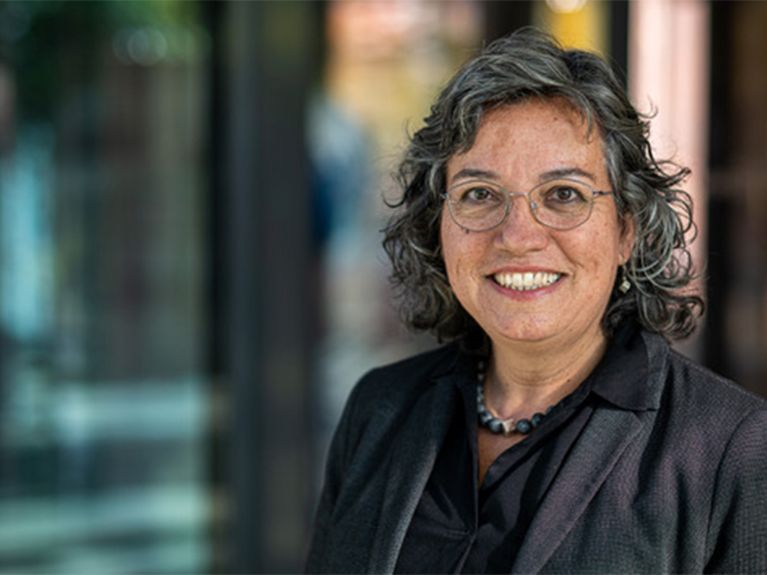
Beate Escher. Picture: UFZ / Sebastian Wiedling
Beate Escher’s research focuses on cell-based bioassay methods that don’t require the use of laboratory animals. In our opinion piece, she explains how these methods could replace animal testing for chemical safety purposes.
The safety of new chemicals is frequently assessed by administering a substance to rats via their food or drinking water over several days. The researchers then observe at what dose the animals’ weight, clinical condition or behavior begins to change. Based on these results, they determine which dose is safe for humans. However, there are alternatives to this method. For example, we can study how chemicals act and what damage they cause directly in human cells. Modern testing methods allow these tests to be conducted quickly, systematically and on a large scale. Nevertheless, these methods are often considered too simplistic to replace animal testing. But that’s not the case, as our research shows.
Every toxic effect has a molecular cause. Chemicals can disrupt hormone receptors, bind to DNA or proteins, disturb the cellular redox balance, or produce reactive oxygen species. If these effects are quantified, it is possible to determine the potential for harm. Toxicokinetic models help to estimate the amount of a chemical that actually reaches the bloodstream following exposure through food, inhalation or the skin. We then compare these values with the concentrations at which the substance exhibits harmful effects in cell tests.
Since chemicals influence a wide range of cellular processes, the most important measurable effects must be selected systematically. This can also be modeled very effectively today. We have classified nearly 500 harmful signaling pathways identified in the literature into six disease clusters: cancer, reproductive disorders, metabolic disorders, immunological disorders, cardiovascular diseases and neurotoxicity. Based on this classification, we have developed a simple, robust battery of tests. Robot-assisted, high-throughput testing allows a large number of samples, concentrations and replicates to be processed with minimal material consumption and strict quality control. However, these tests can also be performed manually in laboratories with fewer resources. High-resolution microscopy (“high-content imaging”), which is increasingly supported by AI, enhances the tests’ diagnostic value.
Our “One Health” approach is based on the fact that many cellular processes can be found in humans and environmental organisms alike. Although ecotoxicology is primarily intended to protect populations and human toxicology to protect individuals, the fundamental effects of cytotoxicity, genotoxicity, endocrine disruption and adaptive stress responses can be studied in both human and animal cells. Therefore, the same animal-free methods can help to protect both humans and the environment.
Of course, cell-based tests cannot replicate all processes in the human body. The interaction of different organs, long-term effects, and the degradation of chemicals continue to pose challenges. However, modern testing methods and computer models are increasingly helping to overcome such limitations. The time has come to further develop chemical approval procedures, moving away from traditional animal testing, which was developed in the last millennium, and towards modern in vitro alternatives.



Readers comments