New Helmholtz annual report published: Long-term research for a lasting impact

The Helmholtz Association’s annual report is published today. It looks back on a successful year at the largest German research organisation, and cites many examples of the Association’s contribution to safeguarding the common future during the current Science Year 2012, which is dedicated to research on sustainable development. “I am very pleased with the Association’s development,” says Prof. Jürgen Mlynek, President of the Helmholtz Association. “We´ve achieved great deals. In expanding our activities in energy and health research, we strengthened our work on major research topics. We also got involved in important national and international cooperation projects with universities and industry partners. Furthermore, we recruited excellent young researchers from Germany and abroad.”
The Helmholtz Association's annual report is published today. It looks back on a successful year at the largest German research organisation, and cites many examples of the Association's contribution to safeguarding the common future during the current Science Year 2012, which is dedicated to research on sustainable development. "I am very pleased with the Association's development," says Prof. Jürgen Mlynek, President of the Helmholtz Association. "We´ve achieved great deals. In expanding our activities in energy and health research, we strengthened our work on major research topics. We also got involved in important national and international cooperation projects with universities and industry partners. Furthermore, we recruited excellent young researchers from Germany and abroad."
"We are helping to make the switch to renewables"
In its research, the Helmholtz Association is actively involved in the process of restructuring the energy supply. Following the events in Fukushima in March 2011, the Association significantly expanded its energy research activities and added a large number of initiatives to this area. It collaborates with research institutions, business, politics and society on making the switch to renewables. "On top of the funding provided by the Federal Government, the Helmholtz Association is investing a further €135 million in order to bridge research gaps, expand and pool expertise, and drive the transition to renewables," says Prof. Jürgen Mlynek.
Between 2012 and 2014, Helmholtz will invest some €63 million in topics that set new priorities in energy research. In particular, it has significantly stepped up its funding of research on energy storage and transport, renewable energies and efficiency improvements. Universities and partners from other research institutions are also involved in this work.
Furthermore, the Helmholtz Association has set up the Recruitment Initiative, which will be granted total funding of €24 million over the coming years. The aims of this initiative are to strengthen energy research, to recruit excellent researchers from abroad and to appoint more women. The Helmholtz Association is thus tackling the issue of equal opportunities. It has already appointed excellent female researchers to senior management positions. Women now make up 38 percent of the Helmholtz Association's overall staff. Twenty percent of the senior management positions in research and administration are held by women - and this percentage is increasing. (Based on figures from 2011. Total number of employees: 32,855.)
In total, the Helmholtz Association will provide at least €1.341 billion in funding for energy research between 2010 and 2014. The annual budget increase provided under the German Federal Government's Joint Initiative for Research and Innovation to non-university research organisations has been particularly important in allowing the Helmholtz Association to strengthen its energy research activities.
"We are focusing on strong collaboration with universities and industry"
There is no doubt that universities are among the Helmholtz Association's most important strategic partners. Helmholtz is planning to work even more closely with university partners in the coming years. "If the universities are in good shape, then so are we," Mlynek says. "Our Helmholtz Institutes are a first-rate example of strategic partnerships with universities.
In setting up these institutes, we have established a basis for long-term close collaboration on specific research fields." In the period covered by the annual report, the Helmholtz Institutes in Ulm and Freiberg grew both in size and scope. Both institutes will receive funding of €20 million between 2011 and 2014. The Helmholtz Institute Ulmfor Electrochemical Energy Storage conducts research on the electrochemical principles of innovative battery systems and develops new materials. Its partners are the Karlsruhe Institute of Technology (KIT) and the University of Ulm. The German Aerospace Center (DLR) and the Centre for Solar Energy and Hydrogen Research Baden-Württemberg (ZSW) are associated partners. The Helmholtz-Zentrum Dresden-Rossendorf and the TU Bergakademie Freiberg co-founded the Helmholtz Institute Freiberg for Resource Technology. The fact that new energy technologies particularly depend on raw materials which will become more expensive on the global market in the future was a motivating factor for the foundation of the institute. The institute not only conducts research on the extraction of economically important mineral and metallurgical raw materials, but also addresses the questions of how we can use these materials efficiently, extract them from waste or even replace them with other resources.
In addition to these institutes, the four new Helmholtz Alliances working on energy research bring together expertise from several Helmholtz centres, universities and companies in order to bridge research gaps and develop innovative solutions for the future energy supply. They will receive a total of €5 million yearly in funding for the next three years. These Helmholtz Alliances will conduct research on innovative battery systems, energy saving potentials in chemical processes, solar cells made of organic-inorganic components, and the potential of fluid hydrocarbons as a means of storing and transporting energy. "The comprehensive restructuring of Germany's energy supply not only requires decisive progress in basic research - it is also vital that the research findings are put into practice without delay. The Helmholtz Alliances working on energy research can make an important contribution in this area," says Prof. Jürgen Mlynek.
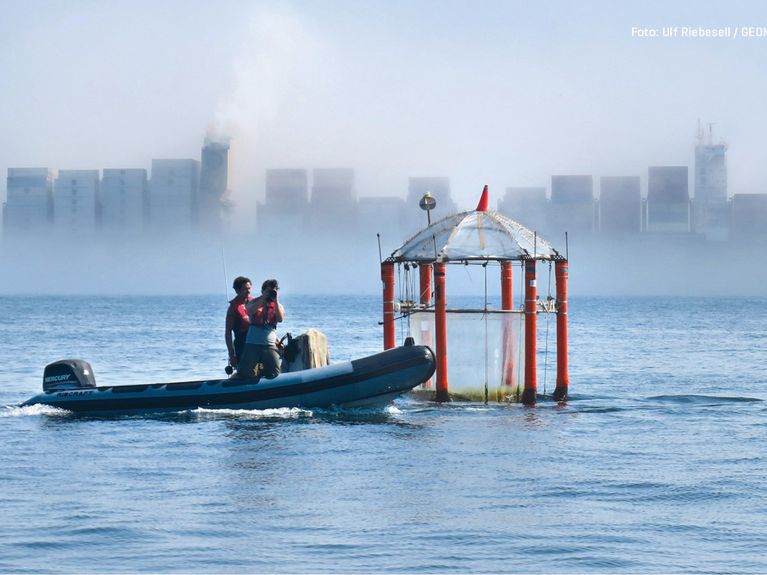
The Helmholtz Association did not only set up new institutes and alliances over the course of the year - it also founded a new Helmholtz centre: The Helmholtz-Zentrum Dresden-Rossendorf has been an important addition to the Helmholtz Association since the beginning of 2011. Another new centre, the Helmholtz Centre for Ocean Research Kiel (GEOMAR) has enhanced the Association's profile since the start of this year. GEOMAR investigates chemical, physical, biological and geological processes in the ocean. It also conducts research on how these processes interact with the ocean floor and the atmosphere. In covering this wide range of topics, GEOMAR is the only research institution of its kind in Germany and enhances the Helmholtz Association's marine research.
"We are strengthening our health research activities"
Apart from expanding its energy research activities, the Helmholtz Association is also consistently developing its work on health research. The Helmholtz centres that focus on health are important partners for the German Health Research Centres, which were established and funded by the Federal Ministry of Education and Research in order to further enhance the research translation process and to improve prevention, diagnosis and therapy options for the major common diseases (metabolic disorders, infectious diseases, cancer, neurodegenerative disorders, cardiovascular diseases and lung diseases). In order to accelerate the transfer of research findings to medical care, the Helmholtz Association has significantly increased its work with university hospitals and built up its strategic cooperation with business partners. Four new German Health Research Centres were set up last year to work on infectious diseases, cardiovascular diseases, lung diseases and cancer. The Helmholtz Association is a major source of expertise in these new centres via the German Cancer Research Centre, the German Center for Neurodegenerative Diseases (DZNE), the Helmholtz Zentrum München - German Research Center for Environmental Health, the Helmholtz Centre for Infection Research, the Helmholtz-Zentrum Dresden-Rossendorf and the Max Delbrück Center for Molecular Medicine (MDC) Berlin-Buch. In addition, over a hundred universities, university hospitals and business partners are involved in this work. The aim is to ensure the efficient transfer of research findings to applications and thus to safeguard innovative and affordable health care in the long term.
"We are bringing application-relevant research findings to the market with the aim of generating greater revenue"
"In order to turn research findings into products, processes or services even more rapidly, we must continue to strengthen technology transfer," says Dr Rolf Zettl, Managing Director of the Helmholtz Association. Apart from facilitating the spin-off and funding programme, Helmholtz Enterprise, the Helmholtz Validation Fund helps Helmholtz centre researchers to validate their research findings within two years to the point where they achieve added or commercial value. As well as providing financial support, the programme also offers courses on management skills. "In the past year, we have supported numerous new spin-off projects that add value," Zettl says. "These projects show clearly that the Helmholtz Association translates its research into products and services across the board, with the aim of generating greater revenue."
The Validation Fund bridges a funding gap on the path from research to the market. Funding of €26 million will be available to Helmholtz centre projects for this purpose from the Initiative and Networking Fund until 2015.
Well-equipped for the future
For over ten years, the Helmholtz Association's annual reports have explained how the organisation uses the research funding that it receives from the state. The Helmholtz Association has pledged to make a contribution to growth and prosperity via the annual increase of five percent under the Joint Initiative for Research and Innovation, which guarantees that non-university research organisations will be granted extra funding every year, thus giving them urgently needed room to manoeuvre. The Helmholtz Association is making use of this increased funding to make the research system even more competitive; to expand its links with partners from research organisations and the economy; to improve the transfer of knowledge from research to the economy; to recruit the best researchers to its research, administrative and technical departments, and support their career development. The funding provided by the federal and state governments also increased last year. In total, basic funding increased by around eight percent from €2.203 billion in 2011 to €2.38 billion in 2012.
Further information (in german)
Link to the online magazine of the annual report www.helmholtz.de/gb12
Prof. Jürgen Mlynek, President of the Helmholtz Association, in a discussion on the Association's research, collaboration with universities and on shaping the German research landscape of the future: www.helmholtz.de/interview-mlynek
A film on sustainable research at the Helmholtz Association: www.helmholtz.de/film-nachhaltigkeit
Related articles


Readers comments