Impact Story #05
An X-ray Glimpse into the Past
Many historical works of art and manuscripts are too fragile to be physically opened for examination. Modern X-ray technology reveals hidden details non-invasively and without damaging the objects.
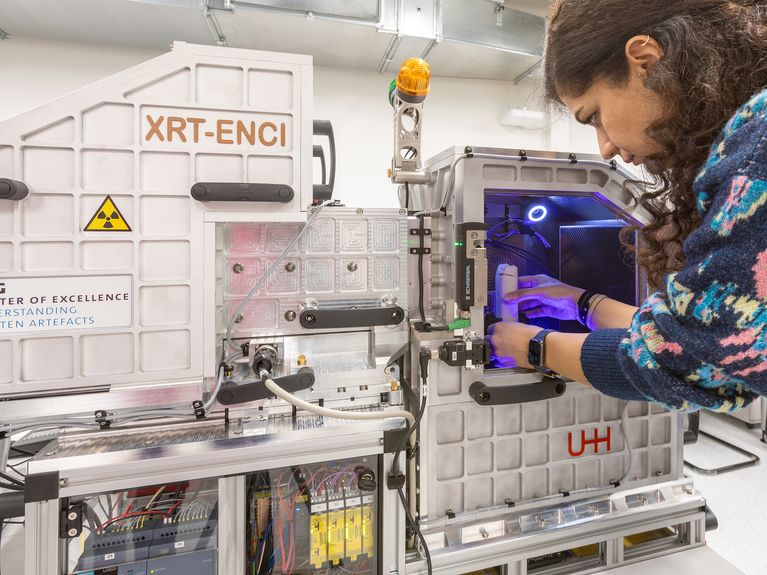
Millennia-old scrolls, paintings, or archaeological finds often contain information that cannot be readily detected using conventional methods. Opening, exposing, or cleaning them could destroy these delicate objects. Researchers at the German Electron Synchrotron (DESY), Helmholtz-Zentrum Berlin (HZB), and Helmholtz-Zentrum Dresden-Rossendorf (HZDR) therefore use advanced X-ray techniques to examine such cultural artifacts non-destructively.
Large-scale research facilities such as PETRA III (DESY), BESSY II (HZB), and the Ion Beam Center (HZDR) generate extremely intense X-ray radiation and ion beams. These techniques enable highly detailed material analyses, for example, to determine the chemical composition of pigments in paintings or ink residues in ancient scrolls.
As a result, researchers have already gained new insights into famous objects, including hidden images beneath paintings by Vincent van Gogh, analyses of the gold plating and bronze alloy of the Nebra Sky Disk, and hidden inscriptions in fragile historical papyrus scrolls.
Museums and research institutions from around the world submit such objects to Helmholtz Association research facilities for analysis to uncover previously inaccessible information and support the preservation of cultural heritage.
Image: DESY, Marta Mayer