Impact Story #14
Clean Groundwater with Carbo-Iron
Toxic industrial chemicals contaminate many soils and aquifers. A material developed at UFZ helps break down these pollutants directly underground.
Worldwide, halogenated organic pollutants—such as industrial solvents—contaminate numerous soils and aquifers. These substances can persist in the subsurface for decades and pose risks to both the environment and human health.
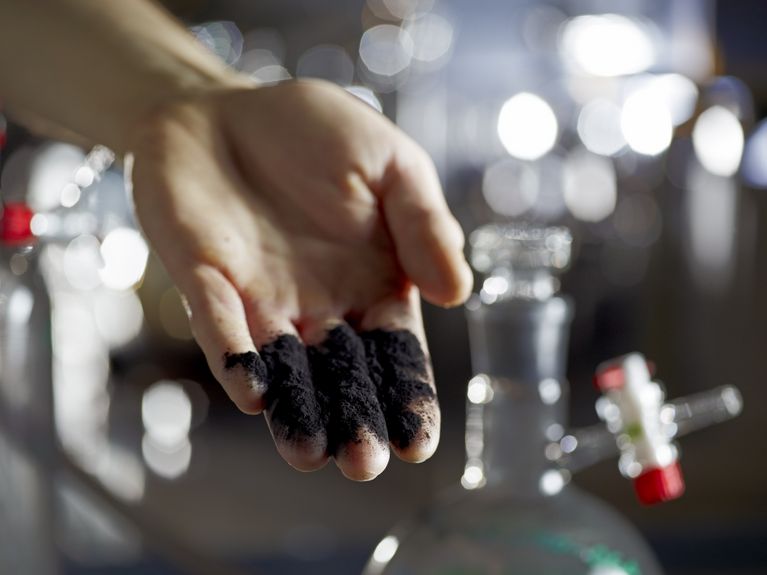
Researchers at Helmholtz Centre for Environmental Research (UFZ) have developed a novel composite material for this purpose: Carbo-Iron®. It consists of microscopic particles of zero-valent iron and activated carbon. The material is introduced directly into contaminated groundwater areas as a suspension.
There, the material disperses throughout the porous subsurface, binding pollutants. The activated carbon binds pollutants, while the iron converts them into less harmful compounds through chemical reduction. This approach enables targeted treatment of contaminated areas without the need to excavate large amounts of soil.
The technology opens up new possibilities for remediating underground sources of contamination. Since 2017, the company Intrapore has commercially distributed Carbo-Iron® for use in groundwater remediation projects worldwide.
Image: UFZ/André Künzelmann