Using surplus electricity from offshore wind turbines
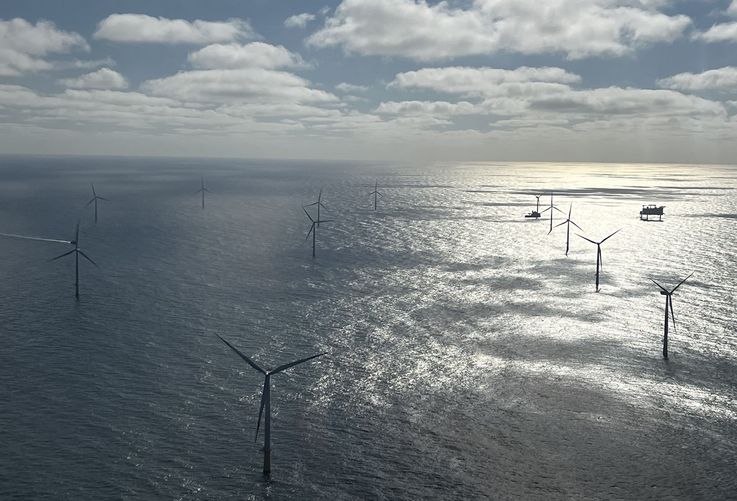
Image: GEOMAR/Carolin Skottke
The Challenge
Offshore wind turbines often produce more electricity than they can feed into the grid. They are typically taken offline during such phases. It would be more efficient to use this excess capacity directly on-site, as transporting the electricity to the mainland is expensive. Furthermore, energy transmission losses occur.
Our Solution
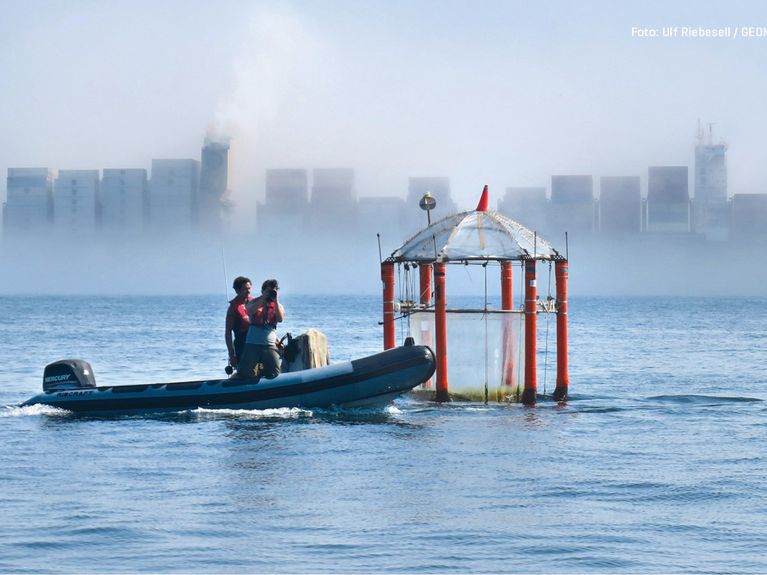
The Helmholtz Association is therefore conducting various projects to investigate how to use the excess capacity of offshore facilities sustainably. For example, GEOMAR Helmholtz Centre for Ocean Research Kiel is developing a system that produces hydrogen on the open sea. The plant utilizes surplus wind energy and seawater in the vicinity of the wind turbines. This approach is novel. To date, hydrogen production has relied on freshwater. Switching to seawater, however, involves complications: the salts and minerals it contains can cause corrosion in the electrolysis system, which splits water into its components, hydrogen and oxygen. To prevent such damage, the GEOMAR team is conducting research in the SalYsAse project into new materials made of porous titanium structures that protect against corrosion. The team also aims to use microbes from the North and Baltic Seas as biocatalysts. The bacteria are already adapted to saltwater conditions and may therefore facilitate the use of seawater.
The Karlsruhe Institute of Technology (KIT) collaborates with the German Aerospace Center (DLR) to utilize surplus electricity from offshore wind farms to produce synthetic fuels. As part of the PtX-Wind project, scientists have developed a floating platform that is deployed directly adjacent to the wind turbines. This platform accommodates a plant that employs surplus wind energy, desalinated seawater, and CO₂ from ambient air to produce a hydrogen-rich synthesis gas through a high-temperature electrolysis process. This gas serves as the raw material for the production of synthetic fuels. The process is well-known but has not yet been used directly at sea, resulting in limited practical experience. PtX-Wind is the world's first floating test platform to replicate the entire process chain.
How are we already benefiting from it today
The German Federal Ministry of Education and Research is funding the GEOMAR SalYsAse project with a total of €733,000 over the next three years. Green hydrogen is one of the most important energy sources of the future because it can be easily stored and transported. KIT's first production plant has been operational since July 2025, producing synthetic fuels offshore near Heligoland. The PtX-Wind project team is testing its performance in real-world conditions. KIT will then use the knowledge gained to develop larger production platforms. PtX-Wind is one of the Federal Ministry of Education and Research's three H2Mare flagship hydrogen projects. In this project, scientists are collaborating with associations and energy suppliers to develop solutions for the use of offshore wind turbines to produce hydrogen.
Green hydrogen from the sea (GEOMAR)