Software for the digital management of infectious disease outbreaks
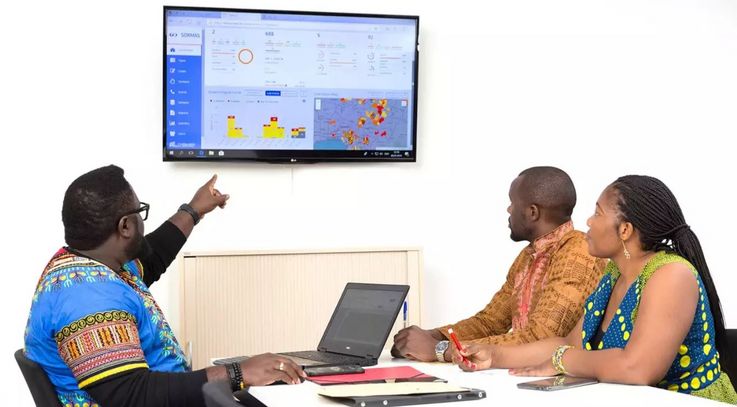
The SORMAS Foundation supports countries in combating pandemics and epidemics. Image: HZI/Verena Meier
The Challenge
When infectious diseases break out, rapid information flow between laboratories, clinics, and health authorities is crucial. Otherwise, local chains of infection can quickly develop from regional to interregional epidemics. In the worst case, there is even the threat of a global pandemic, as was recently the case with COVID-19. To counteract this, it is important that authorities centrally record the relevant test results, treatment plans, and contact lists of infected persons. Hospitals, as well as vaccination stations, testing laboratories, and health authorities, should also adopt uniform technical standards and standardized software programs. This approach minimizes gaps in timely communication. In the event of a crisis, this enables effective planning of protective and preventive measures for the population.
Our Solution
For health authorities to combat epidemics quickly and effectively, they need a comprehensive overview of the current transmission pathways at all times. Scientists at the Helmholtz Centre for Infection Research (HZI) developed the SORMAS (Surveillance Outbreak Response Management and Analysis System) software for this purpose. It brings together the relevant data from all participating institutions on a single platform. This approach enables authorities to identify clusters of cases in real time and respond quickly. For example, SORMAS records the locations of patients, the care they require, and the individuals they have contacted in recent days. These individuals can be alerted to a possible risk of infection as a precautionary measure. The open-source software complies with data protection regulations and allows adaptation to pathogens prevalent in the respective region. SORMAS provides modules covering more than 40 diseases, including Ebola, monkeypox, and polio. The program operates reliably even in regions with limited technical infrastructure. If there is no connection to the mobile network, for example, the system synchronizes automatically as soon as reception is available again. It was developed in 2014, largely by former HZI epidemiologist Gérard Krause, who now works for the World Health Organization (WHO). Today, responsibility for the program lies with the SORMAS Foundation, a non-profit spin-off of the HZI
How are we already benefiting from it today
SORMAS has already proven itself in numerous African countries. Nigeria, for example, has been using it since 2017 to combat diseases such as monkeypox, yellow fever, and cholera. Ghana also adopted the program in 2019. During the COVID-19 pandemic, numerous countries used the SORMAS coronavirus module, including Germany, France, Switzerland, Nepal, and Côte d'Ivoire. The SORMAS Foundation began its work in 2022. It supports countries in adapting the program to their healthcare systems and offers training courses. At the same time, it oversees the further development of the platform. SORMAS is open-source software, allowing interested parties worldwide to add additional tools. The foundation sees itself as a moderator in this process. It connects developers working on similar modules and warns programmers as soon as it becomes apparent that their code could interfere with other elements planned in parallel. SORMAS is a non-profit organization; the foundation aims to prevent financial interests from influencing software development. Twelve countries currently use SORMAS, primarily in Africa, as well as in Europe, Asia, and South America.