Early detection of osteoporosis with a test
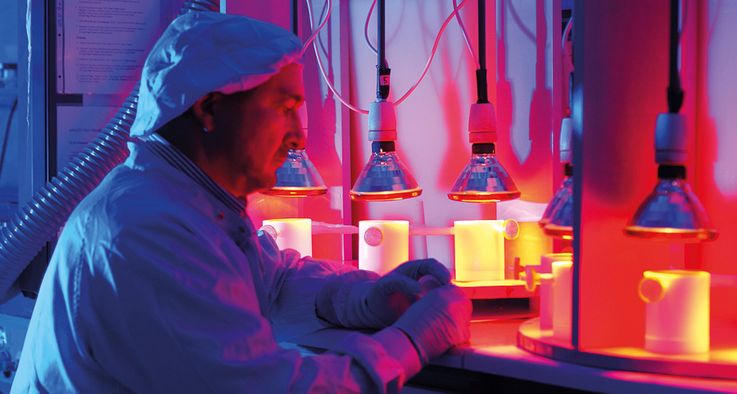
Anton Eisenhauer prepares a blood sample for isotope analysis. Image: Osteolabs
The Challenge
More than six million people in Germany are affected by osteoporosis. Most of those affected are women. The disease, also known as osteoporosis, primarily affects older adults. The condition results from an imbalance in the hormonally regulated processes of bone formation and resorption. The bones become more porous and brittle. Osteoporosis is usually only diagnosed after a bone fracture has already occurred. The standard diagnostic procedure is an X-ray examination to determine bone density. There is no established method for the early detection of osteoporosis. If there were, early-stage treatment would be possible. Such early intervention would prevent many bone fractures and other consequential damage. Given the large number of patients and the consequences of the disease, osteoporosis also has a significant economic impact.
Our Solution
The solution comes from the sea. Corals and bones in the human body share the characteristic of extracting or releasing calcium from their surrounding medium—seawater or blood—for their formation and breakdown. Anton Eisenhauer from the GEOMAR Helmholtz Centre for Ocean Research is investigating the calcium metabolism of corals. Together with colleagues, he has developed a method for determining the proportion of different calcium isotopes—i.e., atomic variants of calcium. The ratio allows researchers to infer the environment in which corals formed their skeletons. Two different calcium isotopes are likewise present in human blood. Heavy calcium originates in bone tissue; light calcium derives from dietary intake. The method is also suitable for distinguishing between the proportion of calcium in the blood that originates from bone resorption and that which comes from dietary intake. The ratio of the two isotopes to each other is an indication of how active bone resorption is in the body. This approach provides researchers with an early detection tool for osteoporosis. A major advantage is that diagnosis requires only blood or urine samples and does not require X-ray imaging. Furthermore, it immediately indicates changes in calcium metabolism and is also suitable for monitoring therapeutic efficacy.
How are we already benefiting from it today
The procedure is available on the market as both a urine and blood test and has already helped several thousand patients. The test is used primarily for the early detection of calcium loss and osteoporosis. It is also used to diagnose and treat other diseases that affect calcium metabolism, such as hormonal disorders, thyroid diseases, and certain types of cancer. Another use is in monitoring the success of medication administration. A key advantage of this test compared to previous methods is its flexibility. Physicians may use it as often as necessary. This approach enables therapy to be tailored to the individual patient and adjusted or continued as needed. The spin-off Osteolabs, which developed the product, aims to be included in the guidelines of medical associations for the treatment of metabolic diseases of the musculoskeletal system. A key step in this direction is a recently published study involving several thousand patients.