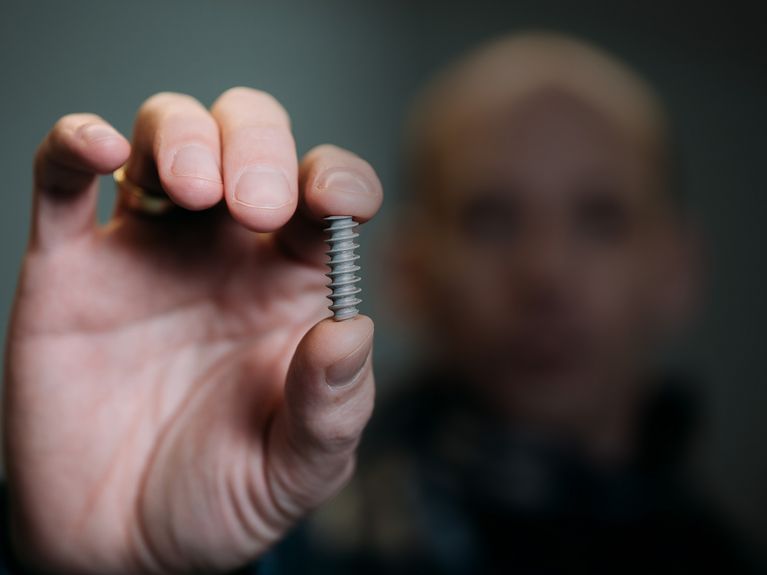
Implants That Dissolve
Metal implants are commonly used to stabilize fractures but often require subsequent removal. New materials developed through Helmholtz research could eliminate the need for a second surgical procedure.
After a bone fracture, surgeons frequently use titanium or stainless-steel implants to stabilize the affected bone. However, these implants usually require removal in a subsequent surgical procedure, placing an additional burden on patients.
Researchers at Helmholtz Centre Hereon have therefore been developing magnesium-based implants as an alternative for many years. Magnesium is biocompatible and gradually degrades within the body over time. The goal is for the implant to dissolve completely after healing without requiring surgical removal.
Developing such materials is highly complex. In addition to selecting suitable alloys and manufacturing processes, researchers must also understand how the material behaves within the body.
To investigate these processes, researchers use digital models (“digital twins”) and experimental studies to simulate and optimize interactions between implant materials and surrounding tissue.
In the long term, such implants could not only eliminate the need for additional surgery but also actively support the healing process, particularly in children and in cases of complex fractures.
Image: JEWRO Photography