Viewpoint
Why We Must Act Now in Biomedical Engineering
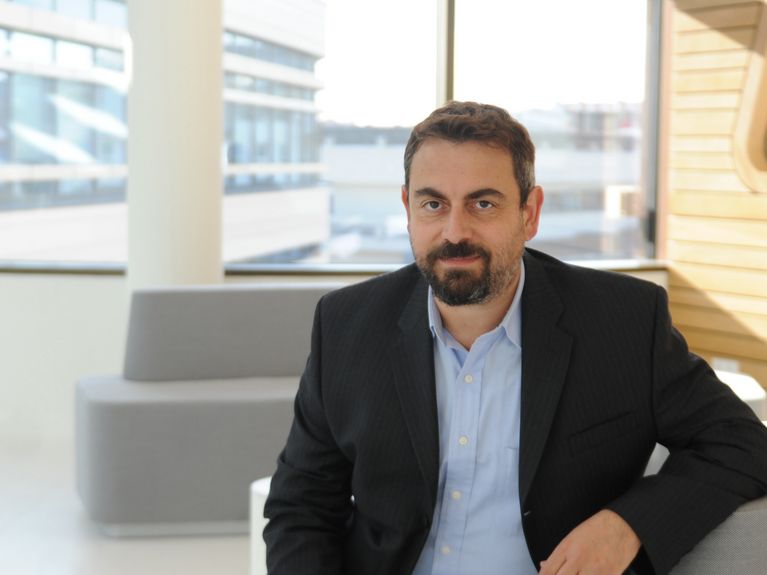
Prof. Vasilis Ntziachristos, Director Institute for Biological and Medical Imaging and Director, Bioengineering Department
Germany has the opportunity to extend its strength as an engineering powerhouse into medicine and the life sciences. Vasilis Ntziachristos explains how this can be achieved using three key levers.
Whether Germany can remain competitive in tomorrow’s technologies depends not only on improving legal frameworks, critical infrastructure, and available capital but, critically, on the effectiveness in establishing an engineering‑driven invention and innovation culture and education in the biomedical sector.
1. We must strengthen biomedical engineering as its own field of research and innovation.
Today, biomedical translation is largely associated with trial-and-error clinical testing of drugs and other biological agents on humans, an approach that carries both high risk and high cost. Through pivotal investments by the Whittaker Foundation in the 1970s and the subsequent establishment of the National Institute for Biomedical Imaging and Bioengineering, the United States has firmly positioned biomedical engineering as a driving force of biomedical invention and transformative translation, with an estimated 100 bioengineering faculties across its leading institutions. Asian countries are likewise following suit, with the foundation and rapid expansion of an even larger number of bioengineering faculties in the last decade. Yet, in Germany, bioengineering faculties remain a rarity, signifying a great need to establish a competitive academic and research infrastructure to lead efficient solutions for patient healthcare. Consistent with its aim to impact human health and by leveraging our expertise and synergy with our strong University partners in the Munich area, Helmholtz Munich established in 2021 the Center for Bioengineering to transform fundamental research into technologies that advance discovery and its translation to solutions for human health, aiming also to raise awareness on the link between biomedical engineering progress and efficient translation.
2. We need engineering invention, not only technology innovation
Artificial Intelligence revolutionizes every aspect of life today. Innovative AI implementations address needs in many domains, from robotics and automation to medical imaging and protein design. Yet all these innovations link to critical engineering inventions, dating back to the 1950s, which started AI as the field that has become a household name today. As in the case of AI and many other transformative technologies, progress depends on the right environment and a critical mass of talent, that will not only apply existing technologies but will invent the future. The nationwide initiative of the Helmholtz Association, “Helmholtz Biomedical Engineering,” is already an important milestone, bringing together nine research centers that pool their expertise and infrastructure to promote invention, innovation, technology transfer and support for start-ups with the aim to shape the future of medicine.
3. We must actively educate and attract top talent in an integrated manner.
Electrical and mechanical engineering operate on the same basic knowledge as physics. The key difference therefore between engineering and physics is culture, not knowledge. Engineering aims to invent and innovate solutions whereas physics aims to discover new principles and mechanisms. This cultural difference is established through dedicated educational programs that train students to define and approach problems in specific ways. Classical engineering departments have evolved into thriving centers that drive innovation and economic growth by training future leaders, innovators, and inventors. In the same way, the establishment of biomedical engineering departments will create a dynamic ecosystem that supports technological and economic advancement in medicine, agriculture, and industrial manufacturing. It is critical to unify bioengineering ecosystems with strong educational programs in Germany and Europe, to assert a competitive presence in the biology and medicine of the future.
Germany’s Hightech Agenda provides the framework and the opportunity, as a Whittaker Moment for Germany, to leverage the important research already underway and secure our technological sovereignty, economic sustainability, and improved medical care. But after all, technology is by definition the result of engineering. Therefore, it is not possible to have a successful HighTech agenda in the life sciences, without strong biomedical engineering and bioengineering.
Prof. Vasilis Ntziachristos is Director Institute for Biological and Medical Imaging and Director, Bioengineering Department.



Readers comments