Impulse
Why science, industry, and risk need to be rethought
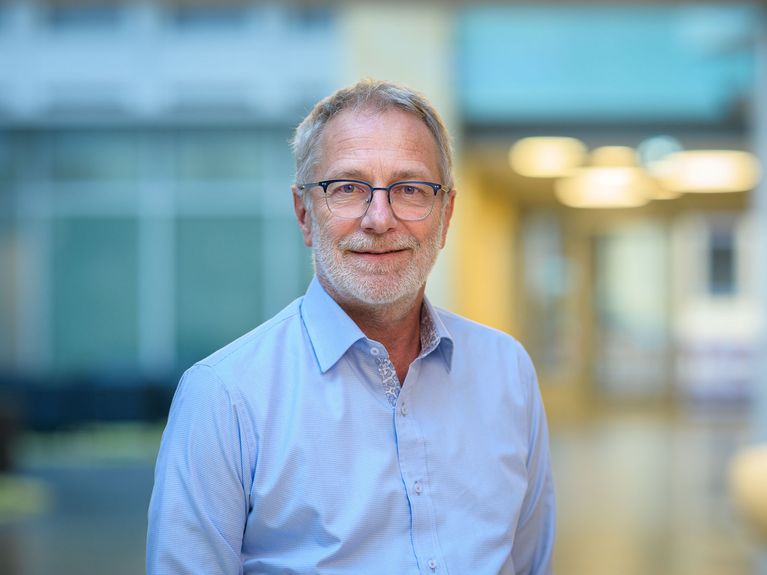
In November 2025, Prof. Dr. Martin Keller became President of the Helmholtz Association. Image credit: Helmholtz/Phil Dera
Germany has the potential to leapfrog. Whether we use it depends on political will, says Martin Keller, President of the Helmholtz Association.
Germany and Europe are at a strategic turning point. The question is no longer whether global innovation centers are shifting, but whether we can use this shift to our advantage. After spending around 30 years in the U.S. and recently returning to Germany, I can see that we have almost everything we need here. What we lack is the courage to use these conditions consistently—and the willingness to treat speed as a location factor. This is an opportunity, not an automatic process. We must take action.
In the U.S., science has recently come under increasing political pressure. This creates an opportunity for Europe. International talent is rethinking its options—not only in the U.S., but also in countries such as India, where top talent has long been expected to relocate to the United States. Europe should take such signals seriously from a strategic perspective and use them to develop concrete location policies.
Companies are also reacting. Cleantech and Greentech firms that have relied on stable U.S. commitments and programs are now seeking more predictable conditions. Anyone investing billions in factories, research, and supply chains requires planning security that extends beyond election cycles. Europe can be such a market—if it delivers.
Attractiveness is not created solely by support programs. Faster visa procedures, recognition of qualifications, reduced bureaucracy, and a genuine culture of welcome are crucial. This encompasses the practical aspects of relocation and onboarding, including housing, bank accounts, healthcare, and interactions with public authorities. People who come to Germany should not be deterred by tax identification numbers or by the procedures for opening bank accounts. Moreover, top talent rarely relocates individually. Dual-career solutions are therefore an integral part of location policy.
Leapfrogging means making significant leaps. The priorities are clear: AI, quantum computing, biotechnology, fusion, climate-neutral energy, and microelectronics. This requires a willingness to take risks, maintain speed, and the ability to consistently halt projects when targets are not met. Even the terminology reveals the cultural difference: venture capital versus risk capital. In innovation-driven systems, failure is part of the learning process. However, it is still frequently perceived as a stigma that hinders career progression.
Germany’s basic funding is a strength. However, it should be supplemented by goal-oriented, agile models—based on the ARPA/DARPA principle: clear milestones, rigorous reviews, stop/go decisions, and rapid reallocation of funds. This approach maintains a stable foundation while accelerating implementation, and it is crucial that we have the courage to prioritize: rather than funding everything, we should consistently advance the most important initiatives.
For this to succeed, research must systematically help de-risk technologies for European companies. In the U.S., the core mission of the National Labs was to eliminate risk, accelerate technology transfer, and increase competitiveness. This requires industry to clearly identify innovation gaps and for public-private partnerships to be treated not as the exception, but as the standard—transparent, fair, and results-oriented.
The building blocks for this already exist. The Federal Agency for Breakthrough Innovations (SPRIND) demonstrates how bridges can be built toward application, typically from medium maturity to scaling. At the same time, bottlenecks often arise between research at an early stage of maturity and the first pilot. It is precisely these transitions that we must systematically close and scale.
Ultimately, there is one simple question: how can science make a concrete contribution to keeping German and European companies at the forefront? The answer lies in cooperation with industry, speed in decision-making, and the courage to take risks—in terms of organization, culture, and funding logic. Germany has the potential to leapfrog. Whether this potential is realized depends on political will.
This article is based on Martin Keller’s presentation at the high-level roundtable Forum Leapfrogging on December 15, 2025, and was first published in Table.Briefings.
Leapfrogging means taking significant leaps instead of small steps. The Table.forum “Leapfrogging Germany” highlights how Germany and Europe can regain their lead in key technologies through speed as a location factor, a new culture of risk-taking and learning, and structures that systematically accelerate the transfer of science into industrial implementation.




Readers comments