One of 47,000
Three questions for data scientist Dasha Trofimova
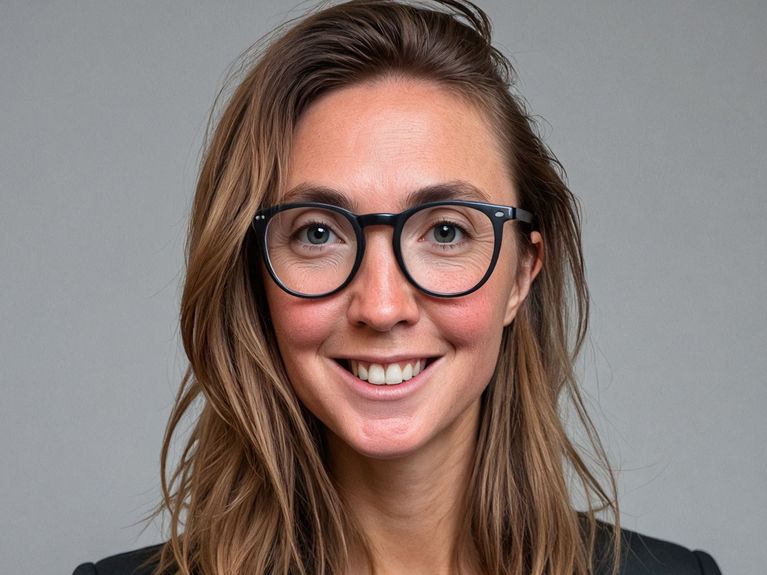
Dasha Trofimova is a data scientist and develops AI systems for analyzing medical image data at the German Cancer Research Center (DKFZ).
1. What is the most exciting thing about your job?
For me, the most exciting part of my job is solving complex puzzles. Research constantly challenges us to push the boundaries of what is known, to achieve something genuinely new, or to translate technological novelty into entirely new domains.
A very good example of this is our work on the Human Radiome Project, where we are building a foundation model for 3D radiology. The “puzzle” in this context is enormous: from collecting and curating vast and heterogeneous clinical image data (an unprecedented dataset of over 4.8 million 3D volumes of MRI, CT, PET and more images), to designing self-supervised learning methods, to choosing appropriate architectures, to defining and evaluating downstream tasks (tumor detection, segmentation, disease risk prediction, cross-modal analyses, etc.).
We combine all of this into a coherent, robust, and generalist model that aims to improve diagnostics, assist in clinical decision-making, and ultimately lead to more equitable and efficient healthcare.
2. If money and time were no object, what would your next project be?
I would dedicate myself to an internal impact study on scientists within public research organizations. We rarely pause to reflect on how we, as researchers, influence the people around us. Most of our attention goes to task-oriented goals: submitting papers, beating baselines, winning grants. But our internal impact matters just as much: how we treat colleagues, how we navigate competitive environments, and how we show respect, attention, and empathy in daily scientific life. I would love to explore how these interpersonal dynamics shape scientific progress and individual well-being, and how we can cultivate healthier, more supportive research cultures.
3. Who would you like to have dinner with and what would you talk about?
I would choose to have dinner with my family, who are mostly scientists themselves but live far from me. Our conversations naturally gravitate toward science, education, and the environments in which people learn and grow. I would love to discuss how we can foster a scientific community where people of all backgrounds and working styles can thrive. Creating such environments is both a personal aspiration and a professional responsibility.


Readers comments