Energy system
Reorienting Ukraine’s Energy Policy
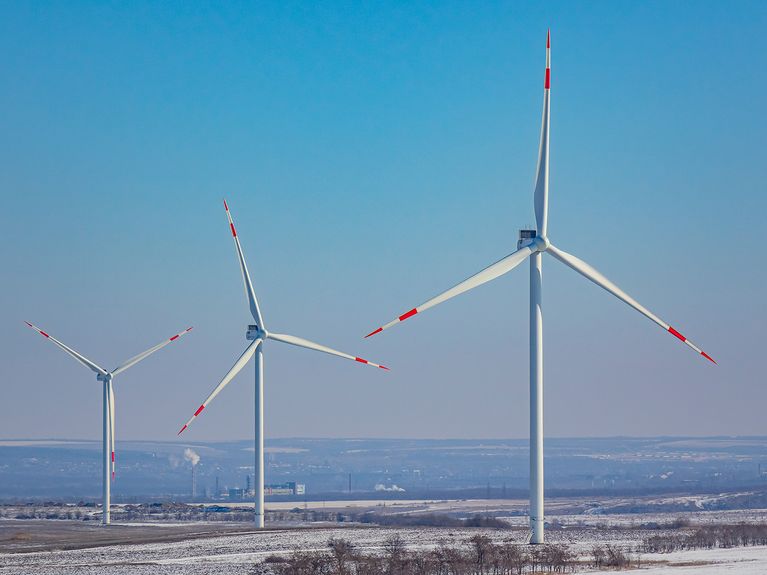
Wind turbines in Kherson, Ukraine. Image: Shutterstock/Artem Grebenyuk
Ukraine must secure its energy supply under extreme conditions while at the same time planning for the long term. The “Green Deal Ukraïna” project supports this process through scientific expertise. The article is based on a conversation with Susanne Nies and Georg Zachmann, who lead the project at the Helmholtz Centre Berlin.
When a power outage occurred in Berlin in early January 2026, the problem was resolved after five days. In Ukraine, by contrast, many people have been living with recurring power cuts since 9 January. In temperatures below -10°C, they have to endure hours without electricity and heating, and often without running water too.
The attacks on Ukraine’s energy infrastructure show that securing energy supply is not only about short-term measures, but also about fundamental political decisions. EU accession would therefore bring substantial benefits for Ukraine: it would give the country access to European investment programmes and the integrated energy market, while at the same time binding it more closely to Europe politically and strategically.
Against this background, the BMFTR-funded project Green Deal Ukraïna supports Ukraine in preparing step by step for EU accession. The project is based on analyses and training programmes that accompany the reorientation of energy policy in wartime. The aim is to make the energy system more resilient and more decentralised. The following examples illustrate how this support is put into practice.

Dr. Susanne Nies is project lead of von Green Deal Ukraïna at the Helmholtz-Zentrum Berlin. She is an expert on international energy and climate policy, with a focus on electricity, EU and Central- and Eastern Europe. Image: Ihor Veriutin
Training for EU accession negotiations, organisation of local heating programmes, and mobilising funding
In order to join the EU, Ukraine must adopt the entire body of EU legislation, including that relating to energy and climate policy. For many Ukrainian institutions, this currently poses a major challenge. In response, the project partners developed comprehensive training programmes together with the Florence School of Regulation and the Kyiv School of Energy Policy. More than 700 staff members from ministries, parliament, municipalities, and state-owned companies have already taken part.
The impact of these programmes became particularly evident during preparations for the EU accession negotiations. In so-called mock sessions, participants practised negotiations under time pressure and in response to critical questions. “Representatives from Brussels told us that, following these preparations, the Ukrainian delegation appeared far more confident. The talks were highly structured and successful,” reports Georg Zachmann, the project’s scientific lead.
Practical training courses were also held at the municipal level, where staff from local authorities and utilities learned how to organise heating programmes and access funding. “Many municipalities are absorbed by acute energy and infrastructure problems and have little time for strategic planning,” explains the project lead Susanne Nies. “That is precisely why these training courses matter.”
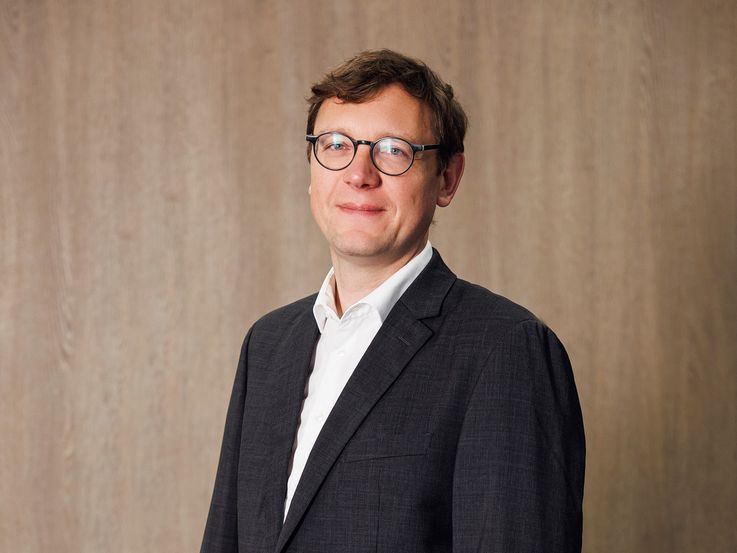
Dr. Georg Zachmann is scientific lead of Green Deal Ukraïna at the Helmholtz-Zentrum Berlin. He is a well-known economist co-leading the energy- and climate area at Bruegel, Europe’s top economic think tank. Image: Ihor Veriutin
Guarantee fund facilitates private investment in renewable energy
Another focus of the project has been the preparation of a guarantee fund designed to facilitate private investment in renewable energy. Under wartime conditions, investments involve substantial risks, and without guarantees, private capital remains scarce. “We want private actors to invest,” says Zachmann. “They bring additional capital into the country and often know best where projects can be implemented effectively.”
Renewable energy can also reduce systemic risks. While the failure of a large power plant can affect entire regions, damage to individual solar or wind installations tends to remain local. Renewables therefore serve a dual purpose: supporting reconstruction and strengthening short-term resilience.
Energy system model helps to limit power outages
The project’s work is based on a detailed analysis of Ukraine’s energy system. Over recent years, the team has developed a model that assesses the conditions under which power outages occur and how increased electricity imports can mitigate them. The findings significantly shaped the debate on import capacities and contributed to raising potential electricity imports from Europe from 1.7 to 2.45 gigawatts.
Beyond this, the model informs a wide range of policy questions and feeds into the work of Ukrainian ministries as well as European institutions and partner governments. German government bodies, the G7 Plus, the European Commission, and the International Energy Agency draw on these analyses because they are regarded as neutral and robust.
To ensure that the expertise built up through the project is sustained over the long term, an energy and climate laboratory has been established in Kyiv. For Nies, the institute is a central element of the initiative: “The goal is to establish a permanently anchored, independent energy and climate centre in Kyiv. Together with partners from Germany, Ukraine, Poland, and other European countries, the Joint Lab is laying the foundation for a new generation of Ukrainian experts in the fields of energy and climate.”


Readers comments